TROPICAL-TRIBE
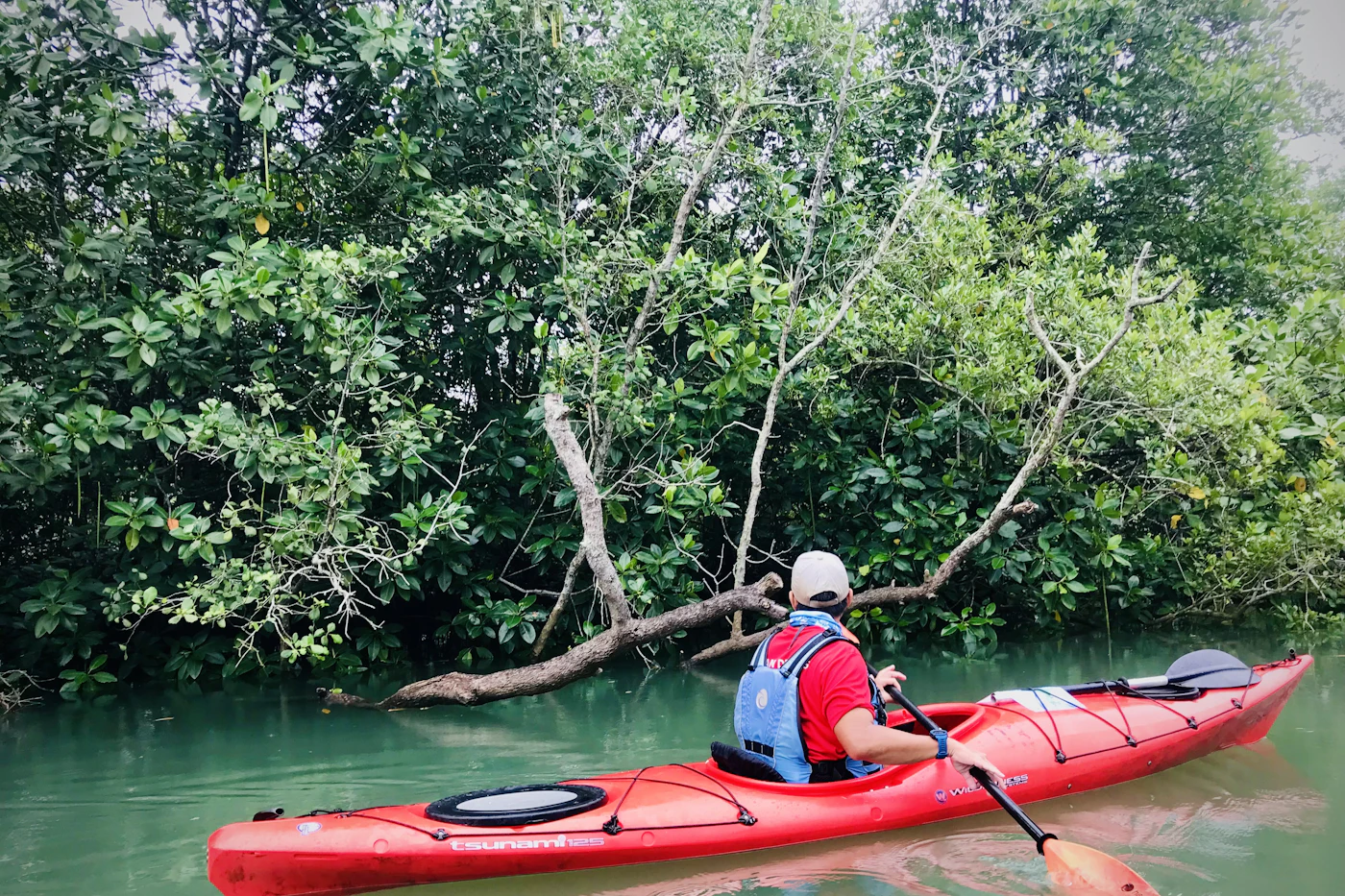
A guided mangrove paddle can reveal a coastline from an unusually quiet angle. Instead of looking toward an island from a beach, you move beside roots, shaded channels, and the edges where water and vegetation meet. The attraction is often the scale of the experience: small observations, a slower pace, and explanations that connect details you might otherwise overlook.
Choosing an appropriate outing matters more than choosing the most dramatic route name. Tours vary in distance, exposure, access, equipment, group size, and the amount of instruction they provide. A calm photograph does not tell you whether a trip suits a first-time paddler or whether the advertised route is available under current conditions. Begin with questions, then choose the experience those answers support.
Decide whether you want a lesson, a nature tour, or a journey
These three experiences can overlap, but their priorities differ. A lesson gives time to learning equipment and technique. A nature tour emphasizes observation and interpretation. A longer journey may focus on covering a route. A visitor seeking a gentle introduction can be disappointed by an outing whose main achievement is distance.
Read how the operator describes the day, then ask what occupies most of the time. Will the guide stop to explain habitat? Is there supervised practice before the route begins? Is the pace set for beginners? Specific answers help you distinguish an educational paddle from a sightseeing trip that assumes existing skills.
Choose one main purpose for your first outing. If it is learning about mangroves, prioritize a guide who can explain the setting and an itinerary with room to pause. If it is developing paddling confidence, seek appropriate instruction. Trying to maximize learning, wildlife sightings, distance, and photography in one booking creates competing demands.
Describe your experience accurately
Tell the provider whether you have paddled before, what kind of craft you used, and whether that experience was recent. Mention practical concerns such as getting into a low seat, remaining seated, managing heat, or understanding spoken instructions. These details help the operator assess fit more effectively than a general claim of being reasonably active.
Ask about the physical tasks involved from arrival to departure. Some excursions may require carrying equipment or walking across an uneven launch area. Others have different boarding arrangements. Do not assume the on-water distance describes the full demand of the trip, or that a short route is automatically easier to access.
If the answers suggest a mismatch, select another activity or operator. This is useful planning, not a personal defeat. A boardwalk, visitor-center program, or suitable boat tour may offer a better way to understand the same habitat. The objective is an enjoyable encounter with the place, not meeting an arbitrary image of adventure.
Find the actual launch point
A tour marketed under the name of a popular destination may depart some distance away. Confirm the address, meeting time, parking or transit options, and the walk from arrival to check-in. Ask whether the return is to the same place. These ordinary details can determine whether the outing fits comfortably into your day.
Check what facilities exist at the launch. Toilets, drinking-water access, shade, and changing arrangements should not be assumed. If a facility is essential, verify its current availability directly rather than relying on a photograph or an old review. Plan the journey so that necessary stops happen before the briefing begins.
Save the provider's contact details and any arrival instructions. A precise entrance description is especially helpful where several businesses use the same marina or waterfront area. Arriving with enough time to find the right group allows the experience to begin with orientation instead of a hurried equipment handoff.
Ask how the route responds to conditions
Mangrove areas are not interchangeable sheltered playgrounds. Routes may include open water, narrow channels, changing water levels, or sections requiring particular maneuvering skills. Ask the operator to explain the character of the proposed route and how they determine whether it is suitable on the day.
The National Park Service's Everglades paddling information illustrates why local detail matters: routes differ in complexity, some become impassable under certain water levels, and current conditions need checking. Those examples should encourage specific questions, not be treated as instructions for an unfamiliar place elsewhere.
Read the weather cancellation and substitution policy before booking. Know who makes the decision, how you will be contacted, and what alternatives are offered. Leave room in your itinerary for a change. An operator who adjusts plans to conditions is doing something more valuable than guaranteeing that the original marketing photograph can be reproduced.
Understand the equipment arrangement
Ask whether the trip uses single or tandem kayaks, canoes, or another craft, and why that arrangement suits the route. If sharing a tandem craft, discuss partner preferences beforehand. A shared boat can be enjoyable, but it also requires communication and an appropriate match of needs.
Confirm that the provider supplies correctly fitted required safety equipment and explains its use. Ask about clothing, footwear, and personal items suitable for that specific launch and route. Follow the operator's instructions and relevant boating requirements rather than assembling a kit from unrelated travel lists.
Do not bring more equipment than you can manage. A phone, camera, or binoculars can become a distraction during a first outing. Ask what can be carried, how it should be secured, and whether suitable dry storage is provided. Waterproof claims on personal products do not remove the inconvenience of losing an item in a waterway.
Examine the guide's environmental approach
A nature-focused tour should explain how it avoids disturbing the habitat. Ask whether wildlife is observed at a distance, whether the group stays on permitted routes, and how sensitive areas are handled. Be cautious about promotional language promising that animals will be touched, fed, surrounded, or produced on demand.
Mangrove roots and nearby habitats are not props for balancing a boat or arranging a photograph. Follow the guide's directions about where to paddle and what to avoid. Do not break vegetation, collect organisms, or reach into the water to investigate something unfamiliar. Curiosity can be expressed through questions rather than contact.
Where a park or protected area maintains a list of permitted operators, use it as part of your research. Authorization is not a substitute for asking about suitability, but it helps establish whether a business is entitled to provide the activity in that location. Confirm current information through the managing agency.
Give the briefing your full attention
The most useful part of a guided outing may occur before departure. Listen to instructions about equipment, communication, spacing, boundaries, and what to do if you need assistance. Ask the guide to explain any unfamiliar term. A group moves more comfortably when its members understand the same basic procedures.
Use the practice period honestly. If something feels awkward or unclear, say so while the guide can help in the intended setting. Do not pretend to have understood because other participants appear confident. Their experience may differ from yours, and the guide cannot respond to a concern that remains hidden.
Agree with a tandem partner on calm, simple communication based on the instructor's advice. Avoid turning every correction into criticism. Learning a shared activity can reveal differences in pace and attention; treating those differences as information keeps a minor coordination problem from becoming the central memory of the day.
Observe the edge rather than chase a sighting
Wildlife is not scheduled around a tour departure. A worthwhile paddle should still be interesting if no notable animal appears. Ask about the shape of the roots, the relationship between adjoining habitats, or the evidence of changing water levels. These subjects are present even when wildlife remains out of view.
Choose a small observation theme. You might notice how light changes between an open area and a shaded channel, or how the shoreline differs along the route. A theme helps focus attention without requiring specialized knowledge. Let the guide supply names and explanations rather than guessing confidently from a quick glimpse.
If an animal is seen, follow the guide's directions and keep the encounter undirected. Do not paddle closer on your own or pressure the group to remain after the guide decides to move. An observation made without altering the animal's behavior is more valuable than a close photograph obtained by crowding it.
Keep photography secondary
Decide before departure whether you want to take photographs at all. On a first paddle, leaving the camera packed may make it easier to learn and notice the setting. You can still record the day with a few pictures at the launch or from an appropriate stopping point selected by the guide.
If photography is permitted during the outing, wait until the guide says the situation is suitable. Keep equipment manageable and follow instructions about boat position and spacing. Do not sacrifice attention to the route while adjusting a camera, or ask others to create a scene that interferes with normal movement.
Include context in your pictures. A broader view of the water and vegetation can describe the experience more honestly than a tightly cropped image suggesting you were alone in a wilderness. Ask companions before photographing them, and avoid publishing precise locations of sensitive wildlife observations without appropriate guidance.
Budget for the complete outing
Compare total practical cost rather than headline price. Transport, parking, equipment inclusions, park admission, and cancellation terms can change the value of a booking. Do not assume an item is included because it appears in a promotional photograph. A clear written list of inclusions reduces surprises.
Consider what you value most. A smaller instructional group may be worth more to a nervous beginner than a longer route. A convenient launch can reduce travel stress. A nature specialist may be especially valuable to someone interested in habitat. Value is the match between the outing and your purpose, not simply the greatest number of advertised features.
Avoid combining the tour with too many other paid activities on the same day. A buffer afterward gives time to change, eat, and talk about what you noticed. It also makes a delayed departure or weather adjustment easier to absorb without losing another reservation.
Build a satisfying land-based alternative
Research a nearby established boardwalk, visitor center, or guided land program that addresses the same environment. Confirm that it is open, reachable, and suitable for your group. This creates continuity if the paddle is canceled or one person decides not to participate.
For example, a hypothetical pair might reserve a guided morning paddle and keep the afternoon free for a visitor-center exhibition. If wind makes the paddle unsuitable, the exhibition becomes the main activity, followed by an approved shoreline walk if conditions allow. The day still explores the coastal habitat without forcing the original method.
A good alternative also improves the booking decision. When you know there is another rewarding option, you are less likely to overlook an uncomfortable answer from an operator or feel compelled to participate under unsuitable circumstances. Flexibility makes it easier to choose carefully.
Carry the learning into the rest of the trip
After the outing, write down a few things you learned and the questions that remain. Separate observations from interpretations. You may have seen roots exposed above the water, for example, while the explanation of their form came from the guide. Keeping that distinction makes your notes useful and honest.
Use the experience to notice the coast elsewhere. A distant green shoreline may now suggest connections between land and water that were previously invisible to you. You do not need to become an expert to gain a more attentive way of looking. A short guided trip can change what you notice from an ordinary public viewpoint.
When recommending the outing to someone else, describe who it suited and why. Mention instruction, access, pacing, and the guide's approach rather than promising particular wildlife. That kind of recommendation helps another traveler make a considered choice while respecting the fact that outdoor experiences vary.
A useful message to send the operator
Explain that you are choosing a first guided paddle, describe your recent experience, and ask about the launch, route character, instruction, and stopping arrangements. Add any access needs and ask which parts of the itinerary may change with conditions. This short, specific message gives the provider something concrete to answer. Keep their reply, compare it with the published description, and book only when the two give you a clear picture of what participation involves.
Planning reference
The National Park Service guide to Everglades canoe and kayak trails demonstrates the importance of route-specific conditions and permitted guides. For your own destination, consult its managing authority and ask the operator for current requirements, equipment details, and cancellation arrangements.