TROPICAL-TRIBE
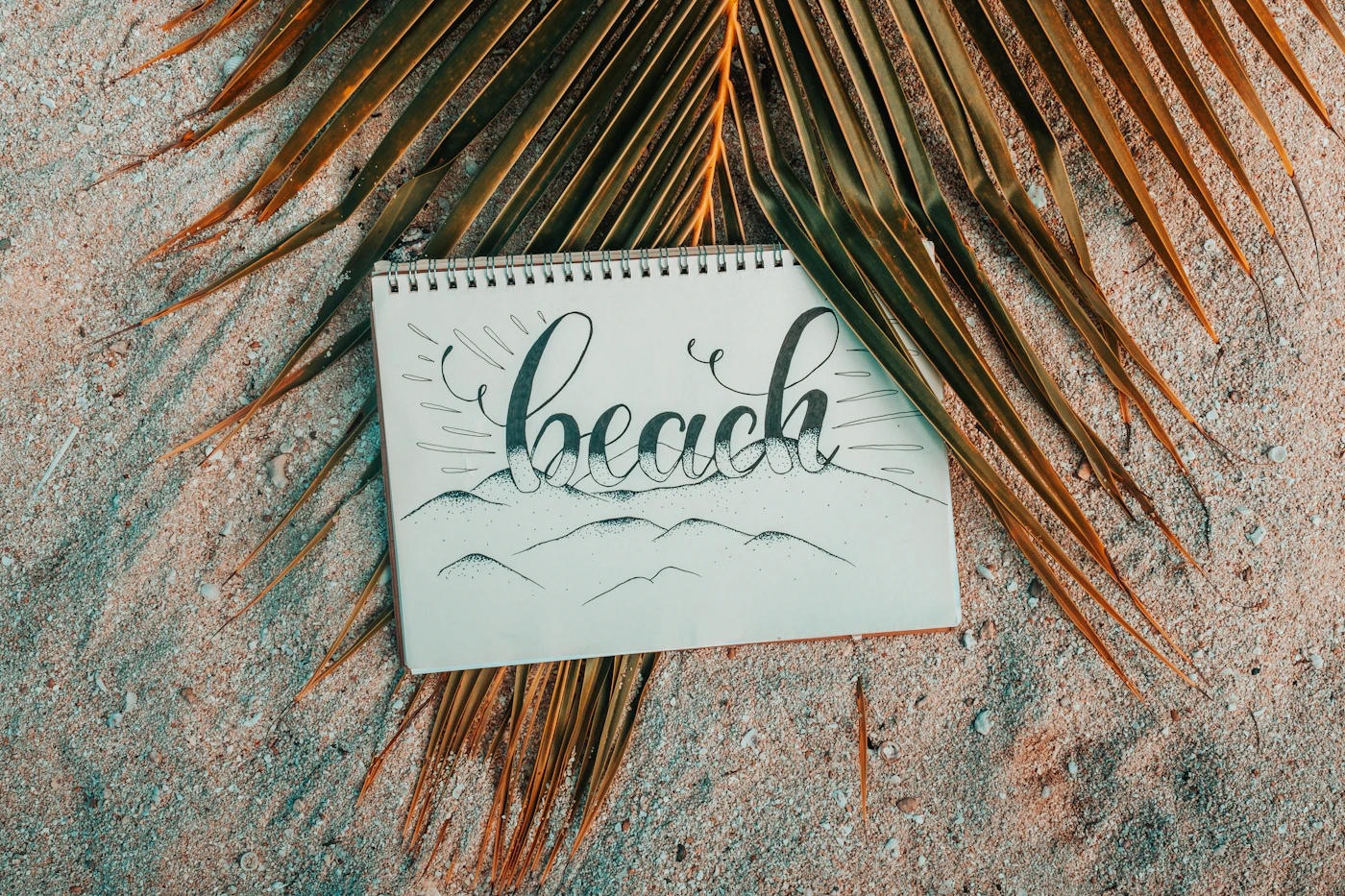
A sketchbook changes the pace of a coastal outing. Instead of moving until a view seems impressive enough for a photograph, you stop to understand a small part of the scene. Where does the roof meet the hillside? Which line gives the harbor its shape? What disappears when you close one eye? The drawing becomes a way of asking questions rather than a test of whether you can reproduce a postcard.
You do not need to identify as an artist to begin. A page can contain a rough outline, a patch of pencil shading, and a sentence about something that was difficult to draw. That combination may preserve more of the afternoon than a detailed image copied later from a screen. The useful starting point is a place where you can pause comfortably and appropriately, with no pressure to produce something worth displaying.
This guide concerns looking and drawing from ordinary permitted visitor areas. It is not a reason to approach a cliff edge, enter a closed beach, or stay outside when conditions are unsuitable. Choose the outing first and let the sketchbook fit inside it.
Give the first notebook a modest job
Use a notebook you already own if its pages accept pencil comfortably. A small book that opens easily is enough for learning what you enjoy recording. Expensive paper can make every mark feel consequential, while a familiar notebook gives you permission to try again on the next page. Leave wet media and elaborate equipment for another occasion, after you know whether you like working outside.
Define success as making one observation visible. You might show how a palm trunk bends, how boats overlap from your seat, or how a path narrows in the distance. A page that communicates one of those relationships has done useful work even if the rest remains blank. Date the page and name the general setting so you can understand the record later without reconstructing the entire trip.
Pack for an outing, then add drawing tools
Put your ordinary needs ahead of the art supplies. Your transport arrangements, clothing, drinking water, and access requirements should determine whether the outing works. The drawing addition can be as simple as two pencils and a notebook. A spare pencil avoids interrupting the visit if one breaks, without introducing a large case of tools that requires its own place to sit.
Carry everything in a bag you can close. Loose paper and lightweight packaging become awkward in a breeze, and balancing tools across a public bench can take space from other visitors. Keep the working setup within your own seat or lap. If you need to spread out several sheets to enjoy the exercise, a sheltered indoor location may serve you better than a busy waterfront.
Choose a seat before choosing a subject
Look for a place where stopping is allowed and where you can remain without blocking circulation. A bench facing the water may be more useful than the most dramatic viewpoint if the latter has a narrow path or constant movement. Consider whether you can reach the seat, leave it easily, and use your notebook without occupying neighboring spaces needed by other people.
Test the position briefly before beginning. Check whether glare makes the page difficult to see, whether the breeze keeps lifting it, and whether your own posture feels sustainable. Moving early is easier than becoming attached to a half-finished drawing in an uncomfortable place. Do not improvise seating on barriers, unstable rocks, vegetation, or structures whose purpose is to keep visitors away from an edge.
Reduce the scene to three large shapes
Begin by looking for broad areas rather than objects with names. The foreground may form one dark band, the water another lighter shape, and the distant land an uneven strip. Draw those boundaries lightly. At this stage, a boat does not need a cabin and a tree does not need individual leaves. You are deciding how the main parts share the page.
This exercise helps when a view feels too complicated. If you cannot decide where to start, cover part of the scene with your hand and choose a smaller frame. A few railings against water can be a complete subject. Work with the actual view from your seat rather than shifting mentally between several viewpoints in pursuit of a more dramatic composition.
Compare spaces as carefully as objects
Notice the gaps between things. The open shape beneath a bench, the wedge of sky between two roofs, and the water visible between moored boats can clarify a drawing more quickly than extra detail. Sketch one gap and then see whether the surrounding objects fall into a more convincing relationship. This is an observation exercise, so approximate proportions are perfectly useful.
Try a separate thumbnail consisting only of empty spaces. It can be tiny and unfinished. Compare it with your first outline to see what changed in your attention. You may discover that the harbor felt crowded because the gaps were narrow, or that the view felt calm because a large open area balanced several small shapes. Record that impression in ordinary words beside the sketch.
Use a short session to stay curious
Give yourself a small interval, perhaps long enough for one simple outline and a note, rather than committing to finish the entire page. A loose time boundary encourages decisions. You choose the lines that matter and let minor features remain unresolved. It also makes drawing easier to combine with a walk or a companion's plans without turning the outing into an indefinite wait.
Stop looking at the clock once you have chosen the interval. The purpose is to keep the exercise manageable, not to stage a speed test. If you remain interested afterward, begin another small drawing rather than repeatedly correcting the first. Several brief studies can show changes in your understanding more clearly than one page worked until its original energy disappears.
Let pencil pressure describe emphasis
Make the initial marks lightly enough that you can place another line beside them. You do not have to erase every alternative. A few searching marks can show how you found the edge of a headland or the slope of a roof. Once the main arrangement feels clear, darken selected lines that help the viewer understand the structure.
Avoid outlining every object with the same heavy pressure. Choose where attention should settle. A darker foreground railing might frame a light distant shore, while a deep patch beneath foliage can make the neighboring water feel brighter. These are visual experiments, not rules about how coastal scenes must look. If the result feels cluttered, write down what you would simplify on a fresh page.
Draw movement through repeated glimpses
Moving water is difficult to hold in a fixed image. Instead of following one wave, look for recurring directions and broad patches of light. Add a few marks, look up again, and decide whether the overall rhythm still feels similar. Leave plenty of paper untouched if that better describes the brightness you see. Dense shading is not required simply because water occupies most of the view.
Use the same approach for a shifting canopy or passing boat. You can record a quick position and leave it incomplete when the subject moves. Do not chase a subject along a restricted edge or interrupt another person's activity for the sake of completing it. The unfinished line can become part of the memory: that was the moment the boat left the frame.
Keep people incidental and respect requests
Choose architecture, landscape, or objects when you want to work without making other people your subject. If figures appear in the distance, simple anonymous shapes may be enough to show scale. Avoid concentrating on an identifiable individual who appears uncomfortable, and respect any site rules about drawing, photography, or recording in cultural and private spaces.
Never assume that a sketchbook creates permission to enter an occupied work area. Fishing equipment, market stalls, and waterfront businesses are part of people's daily lives. Find a public position that does not interfere, or ask whether a particular pause is welcome. If the answer is uncertain, select another subject. Plenty can be learned from the shape of the public path itself.
Add notes that a drawing cannot carry
Write a few details beside the image while they are still easy to remember. Perhaps the light was flat until a cloud moved, or the bench faced a view you could not see from the nearby path. Describe what you noticed rather than inventing an explanation for the weather, the landscape, or somebody's work. A personal field page can be precise without becoming a scientific record.
Notes also help when an experiment fails. Write that the distant buildings became too large, the main line was placed too low, or the water needed fewer marks. These observations turn frustration into something usable. On the next outing, you have a concrete question to test instead of a vague instruction to draw better. Keep the language practical and kind enough that you will want to return.
Try a two-page harbor study
For an illustrative first session, imagine a public bench beside a small harbor. On the left page, draw three thumbnail views: the full harbor, one cluster of boats, and the angle of the walkway. Spend more time looking than shading. Choose the thumbnail whose arrangement interests you most, rather than the one that seems most ambitious.
On the right page, enlarge that arrangement and add only a few structural details. Finish with three sentences: what you noticed first, what you noticed after drawing, and what you would like to examine on another visit. The pages now contain both an image and a record of attention. You can close the book without filling every remaining corner or proving that the visit was productive.
Review at home without rewriting the afternoon
Look at the page later in ordinary light. Decide which part still communicates the place to you. You may like a tiny side sketch more than the main drawing, or discover that a sentence captures the atmosphere better than the image. There is no need to repair every page into a finished artwork. The notebook can remain a record of work made under particular circumstances.
If you want to develop a drawing, use another sheet and label it as a later study. Keeping the original intact lets you compare observation with interpretation. You can experiment freely without losing the first encounter. A photograph may help you recall a structure, but it should not turn the initial page into an obligation to correct every difference between your marks and a camera's view.
Try the same subject with different limits
On a spare page, draw a small subject using only a continuous searching line. On another, describe it through a few patches of dark and light without adding a complete outline. Compare which version communicates the relationship you wanted to notice. The subject can be very ordinary: a distant roof against foliage or the curve of a railing visible from your permitted seat.
These constraints offer a way out of repeatedly correcting the same image. Instead of making the original drawing more detailed, you test another method of looking. Keep the studies beside each other and write what each made easier. The line exercise might clarify an angle, while the tonal study reveals that the main shape needed more empty space around it.
Use the comparison to choose one thing for a future visit. You may want to begin with the broad dark area or leave the sky entirely unmarked. Avoid turning the exercise into a rule that every page must follow. A sketchbook can contain experiments that lead nowhere, pages you enjoy immediately, and questions that remain open. Its flexibility is part of what makes it suitable for a quiet coastal pause.
Build a series around an ordinary feature
Choose something easy to encounter again: a stairway seen from a permitted path, a broad curve of shore, or a shaded public courtyard near the coast. Draw it from an appropriate position on several visits. Familiarity reduces the pressure to find a spectacular subject and makes smaller changes easier to notice. You might compare framing, light, or the balance of dark and open areas.
Keep the series short enough to remain inviting. Three pages can be a series, and a gap between visits does not invalidate it. The goal is to develop a relationship with looking, not to maintain a perfect attendance record. Over time, a pencil and a small notebook can become a pleasant reason to pause, giving ordinary coastal places the patient attention they rarely receive during a rushed itinerary.