TROPICAL-TRIBE
Tropical decorating often celebrates lush plants, woven textures, and open windows. None of those visual choices removes the need to understand moisture in the actual home. A room can suggest a shaded garden while still needing prompt attention to a leak, careful textile storage, or a conversation with a property manager about recurring condensation.
This guide is about organizing everyday awareness and maintenance decisions. It is not a diagnosis of an unseen building, a mold-remediation manual, or a promise that a particular decorating style improves health. The useful goal is simpler: notice what is happening, avoid hiding problems behind attractive objects, and know when the next step belongs to someone with relevant expertise.
Separate atmosphere from building conditions
A photograph of an airy tropical home may encourage leaving every window open or filling the room with plants. Your building, climate, weather, and mechanical systems may require different choices. Do not copy an image's apparent lifestyle without considering the conditions in which your room actually operates.
Start by identifying what you control and what you do not. You may control where towels are placed and how furniture is arranged, while building ventilation or a roof leak belongs to an owner or professional. This distinction prevents a decorating project from quietly taking on responsibilities it cannot resolve.
Write down concerns in concrete terms. Water appears on the sill after certain conditions is more useful than the room feels tropical. A repeated damp patch behind a cabinet is a maintenance observation, not a reason to move a basket in front of it. Describing the issue clearly is the first step toward an appropriate response.
Use authoritative guidance for the basic boundaries
The Environmental Protection Agency emphasizes moisture control and prompt attention to leaks. Its household guidance recommends keeping relative humidity below 60 percent when possible, ideally between 30 and 50 percent, and drying wet materials promptly. These are general reference points, not a diagnosis of your home or a guarantee against every problem.
If you use a humidity meter, follow its instructions and understand that a single reading is only one observation at one time and place. Record the location and circumstances instead of treating a number as a complete explanation. A qualified professional can help interpret persistent concerns in the context of the building.
Visible mold, significant water damage, suspected hidden contamination, or moisture involving electrical equipment calls for appropriate professional guidance. Do not paint over a problem, dismantle building materials to investigate casually, or mix cleaning products. Health concerns should be discussed with a qualified healthcare professional. Decorating adjustments cannot substitute for addressing the underlying issue.
Make a room map of ordinary moisture sources
Without opening walls or disturbing equipment, note the routine activities and objects associated with water in the room. These might include plant containers, a nearby bathroom, a frequently used exterior door, a window, or damp items brought in after an outing. The purpose is to organize observation, not to assign blame or diagnose a building defect.
Mark which items need regular care and which require someone else's maintenance. A plant saucer may be your responsibility; a recurring leak around a window frame may require the property manager. Keeping those categories separate helps you act on what is within your role while reporting what is not.
Revisit the map after a change in routine. A new laundry-drying arrangement, additional plants, or a different furniture layout may alter what you need to observe. The map does not need to be formal. A note on your phone with a few locations can be enough to keep a small concern from becoming something you repeatedly forget to mention.
Keep textiles in a cycle of use, care, and dry storage
Textiles move through the home: beach towels arrive, cushion covers are washed, blankets are stored, and curtains are occasionally cleaned. Give each stage a suitable place rather than letting damp or unfinished items disappear into a decorative container. Follow the item's care instructions and use appropriate drying arrangements.
Store only items that are ready for storage. If a cover is still damp, placing it out of sight does not complete the task. Keep the process visible enough that it is easy to finish. A small household may benefit from having fewer spare textiles so that the care cycle remains manageable.
Review closed storage occasionally as part of ordinary housekeeping. Look for signs that the location is unsuitable or that an item needs attention. If you discover a moisture problem, address the condition rather than simply adding fragrance or another liner. Valuable or delicate textiles may require a qualified cleaner or conservator's advice.
Let plants remain manageable household objects
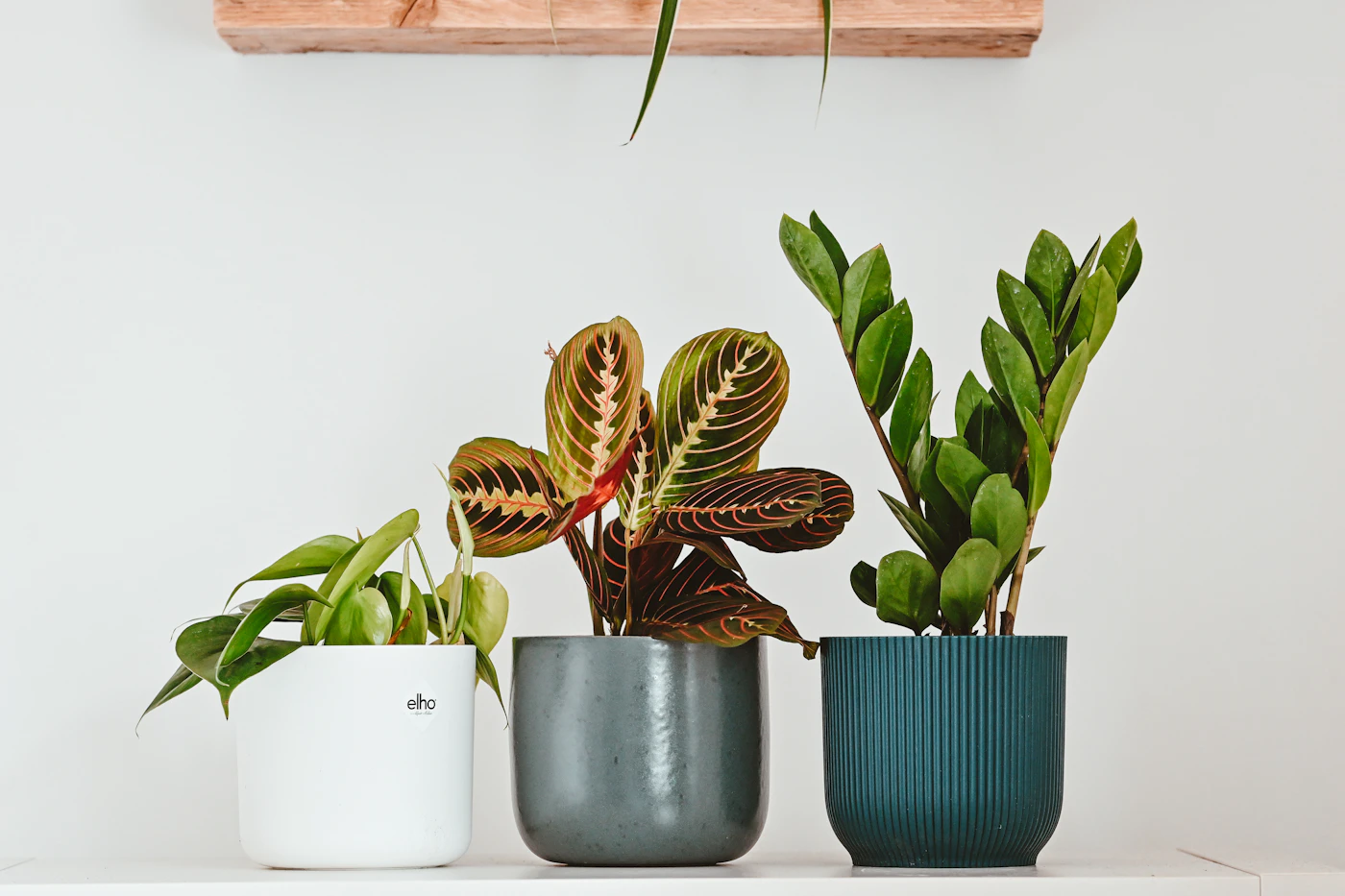
Plants require their own appropriate care, and their containers deserve attention as part of room maintenance. Understand how water is handled in each growing setup and protect surrounding surfaces according to the container and furniture instructions. Keep pots accessible so you can inspect them rather than relying on what is visible from the front.
Do not use a dense plant display to conceal a questionable wall or damaged surface. If an area needs inspection or repair, clear access safely and communicate with the responsible person. The display can be rearranged after the underlying concern is understood. Preserving a composition is less important than being able to see what the room needs.
Avoid making broad indoor-air or health claims about the collection. Choose plants because you enjoy them and can provide suitable conditions. If the collection makes care or access difficult, reduce or reorganize it. A manageable group of plants is easier to integrate into the household's maintenance routine than a display that can only be inspected by dismantling half the room.
Record patterns without turning the home into a laboratory
A short log can help when an issue repeats. Record the date, location, what you observed, and any relevant ordinary circumstances such as recent rain or a particular household activity. Include photographs when appropriate and safe. Keep the language factual rather than speculating about causes you cannot verify.
For example, write that moisture was visible on the lower corner of a window at a certain time, not that the entire building has a specific hidden defect. The first statement can help a professional investigate; the second may create confusion. Clear observations are useful precisely because they do not pretend to be a diagnosis.
Stop logging as a substitute for action. If something needs prompt reporting or qualified attention, do that rather than collecting weeks of evidence while the condition continues. The record supports communication; it does not create a requirement to wait until you have a perfect explanation.
A fictional apartment with a recurring concern
Consider a hypothetical apartment where a resident notices repeated dampness near a window behind a decorative console. The first impulse is to move a tall plant in front of the area because the mark is unattractive. Instead, the resident keeps access clear, records the observation, and contacts property management through the appropriate maintenance process.
The resident describes when the dampness appears, provides photographs, and asks for an assessment. They do not remove trim or attempt to conceal the area with paint. Personal items are moved as appropriate to prevent further damage while the responsible professional evaluates the concern. Any immediate safety issue would be handled through the relevant urgent process.
Separately, the resident reviews ordinary habits: damp beach towels now go directly to their proper care location, and plant containers are easier to inspect. These are useful housekeeping changes, but they are not presented as proof that the window issue is solved. The example shows why daily care and building maintenance should proceed together without being confused with one another.
Communicate with a property manager in actionable terms
Use the reporting channel specified for the property and retain a copy of the request. Include the room, exact location, what you observed, when it began, and whether it is recurring. Explain any damage to personal belongings factually. Ask how access and follow-up will be arranged.
Avoid burying the issue in a long description of decorating plans. The maintenance concern should be easy to identify. If you have a short observation log or photographs, organize them clearly rather than sending an unstructured collection of images. Good documentation makes it easier for the recipient to understand what needs attention.
Follow up through the appropriate process if the concern persists, and consult relevant local housing or public-health resources when necessary. Requirements and remedies vary, so seek current local guidance rather than relying on a generic article for legal conclusions. Keep communication focused on the condition and the requested assessment or repair.
Choose furnishings that allow inspection and care
When arranging a room, consider how you will clean around objects and notice changes behind them. A tightly packed wall of furniture can make ordinary inspection difficult. Follow furniture and equipment guidance for placement, and do not obstruct vents, access panels, or areas that need service.
Select materials according to their intended use and your care capacity. A delicate woven piece may be appropriate on a dry interior shelf but inconvenient in a location where it repeatedly encounters moisture. Ask the maker about suitable conditions rather than assuming a natural material belongs anywhere in a tropical-inspired home.
Leave enough flexibility to move ordinary objects when maintenance is needed. A room that requires hours of dismantling before someone can reach a window or service area creates friction. Practical access can be integrated quietly into the layout without making the space look unfinished.
Give each household member a clear role
Shared spaces benefit from simple agreements about wet items, plant care, and reporting concerns. Decide who handles routine tasks and how anyone can flag a problem. Avoid a system in which everybody notices something but assumes another person has already acted.
Keep instructions specific. Saying that used towels belong in the designated care area is clearer than asking everyone to keep the room dry. Explain where to place items that need attention and how to communicate a spill or leak. The aim is a workable routine, not a list of rules that makes people anxious about using the home.
When guests visit, tell them only what they need to know. A short explanation of towel handling or a request to report a spill is usually enough. Do not expect visitors to understand a hidden household system. Clear hospitality can prevent confusion while leaving the stay relaxed.
Prepare for time away without improvising building systems
Before leaving, complete ordinary care tasks and remove items that should not remain damp or unfinished. Arrange appropriate plant care and make sure a trusted caretaker knows how to contact you or the property manager if a concern appears. Keep the instructions concise and tied to actual responsibilities.
Follow building and equipment guidance for ventilation, climate control, and appliances during an absence. Do not turn systems off or alter settings solely because a general lifestyle tip suggests it. The appropriate arrangement depends on the home, climate, equipment, and owner requirements. Ask the responsible professional when you are unsure.
On returning, look around before immediately restoring decorative arrangements. Notice any unexpected changes and report concerns promptly. This brief check is an ordinary part of coming home, not an invitation to investigate hidden building components yourself. The goal is to catch something that needs attention while it is still clear what changed during the absence.
Keep fragrance and appearance separate from maintenance
A pleasant scent does not establish that a room is dry or that a problem has been resolved. Similarly, a freshly painted surface can look improved without explaining why it was damaged. Treat appearance as one observation among others, not as a substitute for an appropriate assessment.
Choose decorative fragrance only if it is welcome in the household, and do not use it to cover an unexplained odor. If something smells unusual or a concern returns, seek the appropriate advice. A room's comfort should not depend on masking evidence that would help someone understand its condition.
The same principle applies to styling photographs. You can make a room look orderly while still acknowledging a maintenance task that needs completion. There is no benefit in preserving a flawless visual story at the expense of accurate information about the home you actually occupy.
Aim for a room that is easy to look after
A humidity-aware room is not defined by a particular device, plant count, or decorative material. It is a room whose occupants can see what needs care, complete ordinary tasks, and obtain qualified help when the issue goes beyond those tasks. Simplicity often makes that easier.
Review the arrangement occasionally and remove obstacles that have accumulated. An unused basket, an inaccessible pot, or a stack of stored textiles may be adding work without adding value. Let the room's tropical character come from color, light, and thoughtful objects rather than from a density of materials that makes maintenance difficult.
The result can still feel lush and relaxed. Practical care does not remove beauty; it gives beauty a more honest setting. A room that remains accessible, well understood, and responsive to problems is easier to enjoy than one that looks serene while important concerns remain hidden behind the furniture.
Official moisture guidance
EPA's guide to mold, moisture, and the home provides the general reference points used here and explains when professional assistance may be appropriate. Consult current local resources and qualified professionals for conditions specific to your building.