TROPICAL-TRIBE
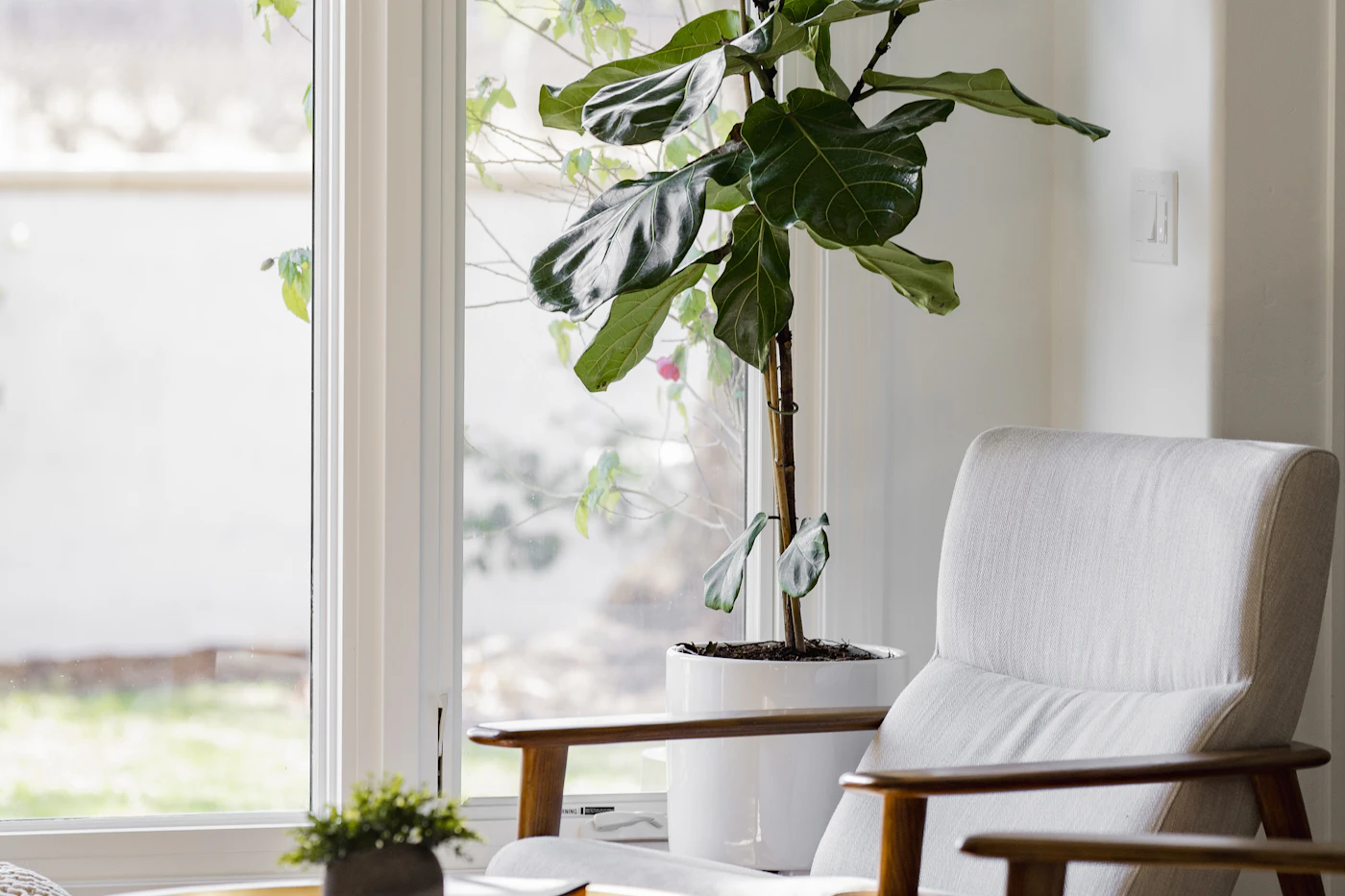
A rental living room arrives with decisions already made. The wall color may not be your choice, the flooring may be difficult to love, and the most useful outlet may sit in an inconvenient place. A botanical interior can work within these facts. It does not require covering every surface with leaves or disguising the apartment as somewhere else.
The strongest starting point is a room that works. People need comfortable seats, clear routes, adequate lighting, and places for the objects they use. Botanical elements can then provide rhythm and character through color, foliage, artwork, and texture. When decoration comes before these needs, the result often looks pleasant only while no one is using it.
Translate rental restrictions into a design brief
Read the lease and ask property management about proposed changes before buying materials. Rules about paint, wall attachments, window treatments, and electrical changes vary. Products described as removable can still damage some finishes, so marketing language should not replace permission or the manufacturer's surface guidance.
Write down what is allowed, what requires approval, and what you prefer not to change even if permission is possible. Perhaps you are willing to hang approved artwork but do not want a project that must be reversed before moving. This is a useful boundary, not a design failure. It directs attention toward portable pieces and rearrangements.
Photograph the room's existing condition for your own records through the appropriate rental process. Keep receipts or instructions for anything you install. A clear record makes it easier to undo a change correctly and prevents the end of a tenancy from becoming a puzzle about which hardware or finish belonged there originally.
Identify the room's strongest existing feature
Look for something worth emphasizing: a generous window, a warm floor, a useful alcove, or a comfortable sofa. Start there rather than with the feature you dislike most. A room can become more convincing when its best element receives attention instead of every decision revolving around concealment.
If the window is the strength, arrange seating to acknowledge daylight while maintaining practical circulation. If the sofa is the most comfortable piece, give it a clear relationship to lighting and a side surface. A botanical room should still feel good on a cloudy evening when the plants and colors are less visually prominent.
Fixed colors need to remain part of the palette. A cool gray floor may call for different supporting tones than a warm beige carpet. Place fabric or artwork samples beside those surfaces before committing. Green is a broad family of colors, and the right version is the one that sits comfortably in your actual room.
Plan the furniture before the foliage
Sketch the room with doors, windows, outlets, and furniture dimensions. Include the paths people use between the entrance, seating, and adjacent rooms. A plant stand that blocks the easiest route will become irritating no matter how attractive it is. Clear movement should remain visible in the plan.
Test the seating arrangement using existing furniture before adding anything. Move a chair, reposition a lamp where it can safely reach an outlet, or remove a small table that has become redundant. Sometimes the room needs a clearer relationship among objects rather than a new object. Give the revised layout a few days of real use.
Keep furniture suitable for its purpose and follow safety instructions for anchoring where required. Rental limitations do not justify unsafe improvisation. If a piece cannot be used safely within the rules and conditions of the home, choose another solution rather than treating its appearance as the deciding factor.
Choose living plants by location, not by empty space
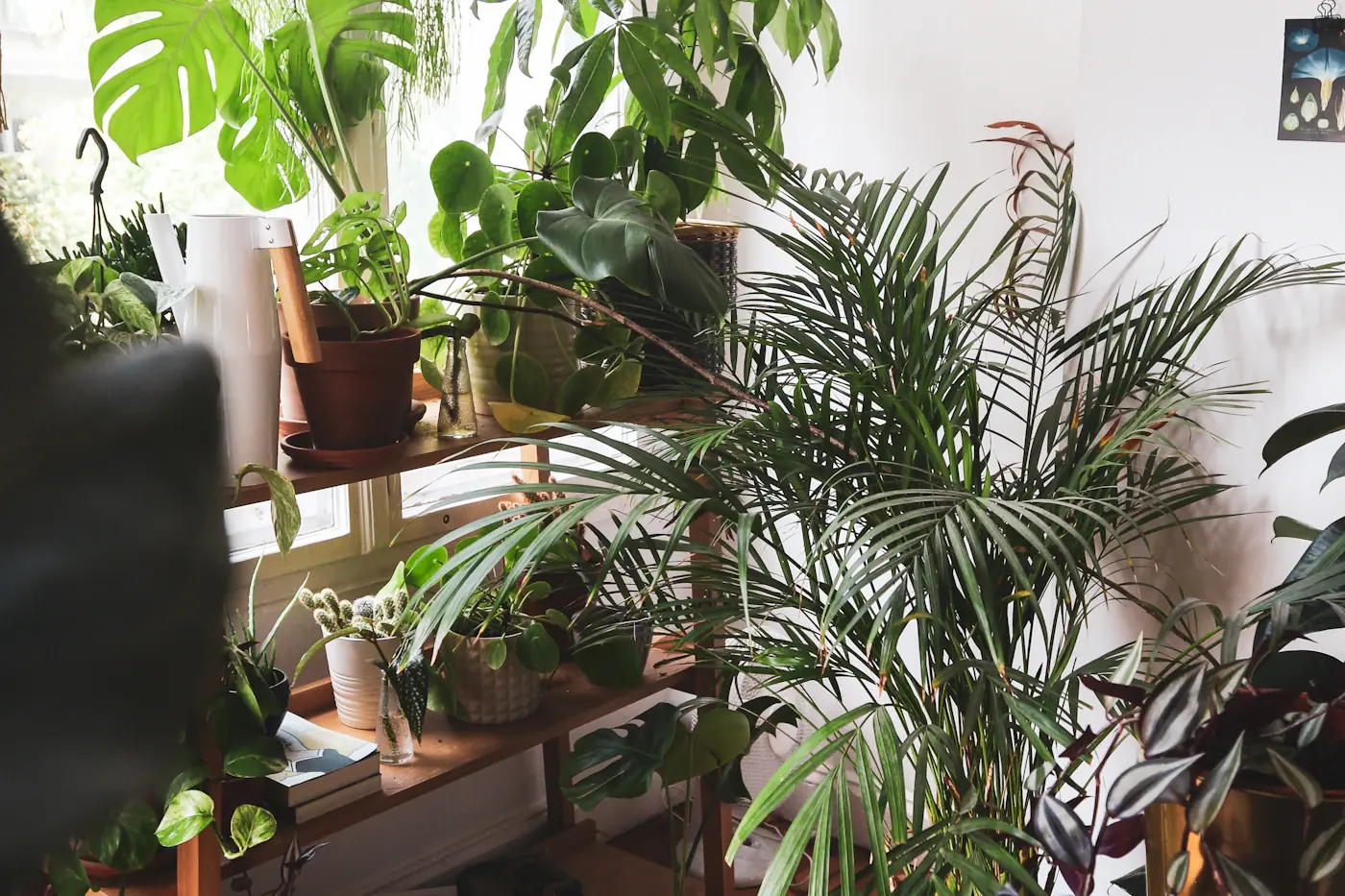
An empty corner is not necessarily a plant opportunity. Observe the light in the room and research suitable plants for the positions available. A small collection near an appropriate window can create a stronger botanical impression than plants distributed evenly into unsuitable locations.
Think about access for care, container drainage, and protection of rental surfaces. A decorative outer pot should not make it difficult to inspect the growing container or manage excess water. Use appropriate protection beneath containers and follow plant-specific guidance. Do not leave water damage to be discovered only when a pot is moved at the end of the lease.
Consider the household as well as the room. Check the identity and suitability of any plant around pets or children using qualified resources. If plant care is not something you want to maintain, use botanical art instead. A living-room style should reflect your routine, not impose an obligation chosen solely for visual effect.
Let artwork provide greenery in the darker areas
Botanical artwork can connect a dimmer part of the room to the leafy area near the window. A photograph, drawing, or print offers color and form without depending on growing conditions. Choose work you enjoy looking at rather than simply selecting anything that contains a palm leaf.
Pay attention to scale. Several tiny prints scattered around a large wall may feel less settled than one appropriately sized piece. Conversely, a very large image can overwhelm a small seating area. Use paper templates indoors where safe and permitted to understand proportions before making a hanging decision.
Follow approved hanging methods and weight limits. Leaning artwork is not automatically safe or suitable, particularly where it could fall or be reached by children or pets. The display method should be as considered as the image itself. A botanical room should not depend on precarious arrangements created for a photograph.
Build a portable palette through textiles
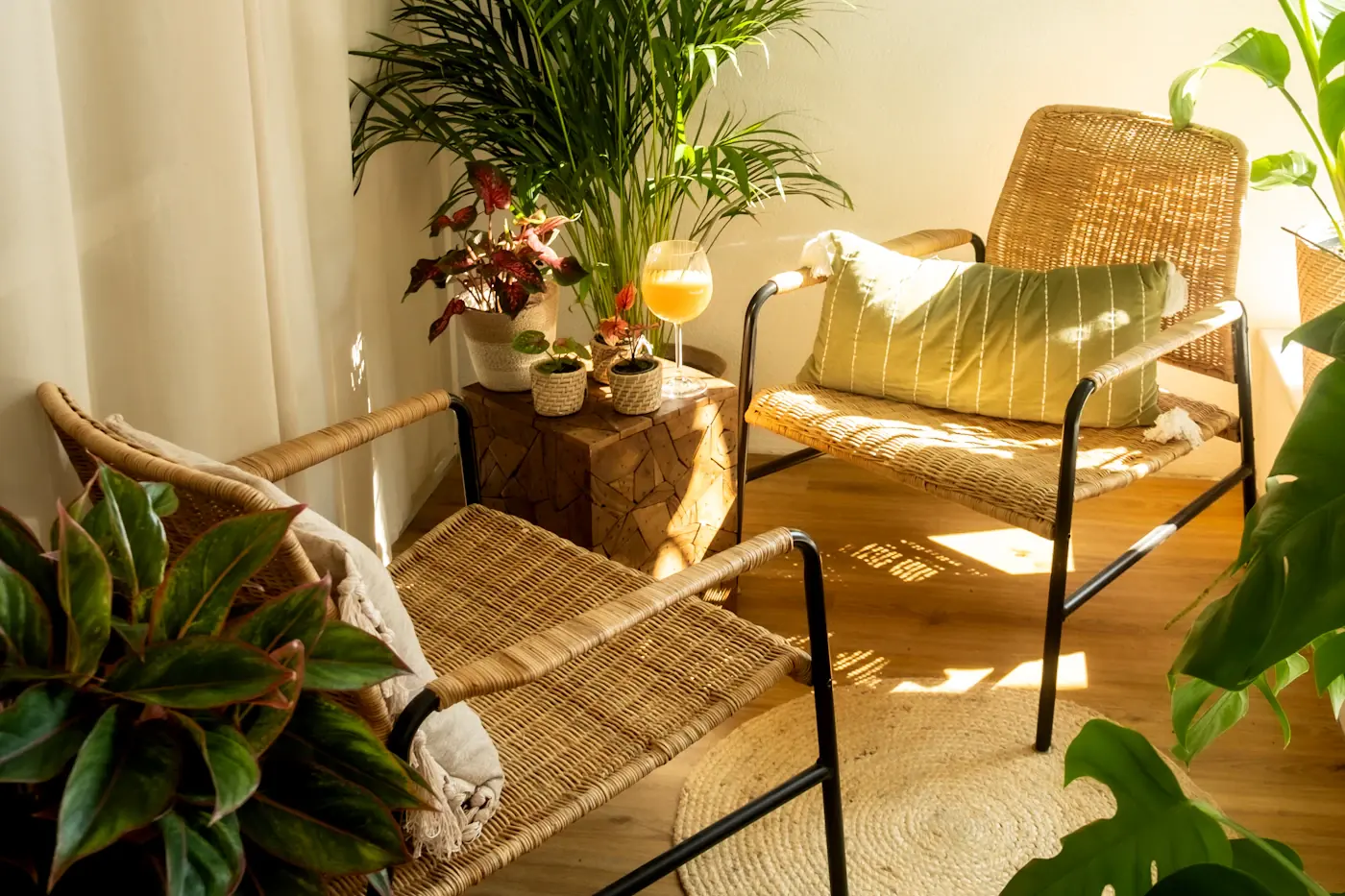
Textiles offer a way to introduce color without changing the building. Cushion covers, a throw, and curtains where permitted can connect existing furniture to the botanical theme. Begin with one main green tone and a quiet supporting neutral rather than purchasing several unrelated shades at once.
Use the room's fixed finishes to guide the choice. An olive textile may work with warm wood; a softer blue-green may sit more comfortably beside a cooler gray. These are possibilities to test, not universal rules. The actual light and adjacent materials will determine what feels coherent.
Choose fabrics you can care for and store. A rental-friendly change is only truly portable if it remains useful when you move. Avoid buying an expensive custom-sized piece for a temporary location unless its value to you justifies that limitation. Standard, versatile pieces may be easier to reuse in a future room.
A hypothetical room with difficult beige carpeting
Imagine a rented living room with beige carpet, cream walls, a dark blue sofa, and one good window. The resident wants a fresh botanical atmosphere but worries that green will clash with the existing colors. The first plan involves hiding the carpet under a large new rug and filling the room with bright leaf prints.
A revised plan begins with the sofa and carpet as facts. A warm ivory throw softens the sofa, while one muted olive cushion connects the blue to the beige. A botanical artwork with a pale background and a small amount of warm brown introduces both existing tones into the leafy composition. A plant is placed near the window after its needs are researched.
The carpet remains visible and stops being the room's central problem. A clear coffee table and better lamp placement make the space more usable. The resident purchases only what fills a specific gap, keeping the rest reversible and portable. The result feels botanical because of connected choices, not because every surface has been replaced.
Use texture to reduce the need for more objects
A room can feel rich without a large number of accessories. A woven cushion, a plain ceramic bowl, and a wood side table provide different tactile qualities while remaining visually quiet. This variation gives the eye something to notice without introducing a new color or motif on every surface.
Be selective with baskets. They can hold useful items, but a basket filled with unsorted clutter is still clutter. Give each one a defined purpose, such as holding a reading blanket or keeping a small set of magazines together. If its contents are never used, the container may be concealing a decision that needs to be made.
Avoid assuming that natural texture proves responsible sourcing. If you buy a new piece, look for specific information about material and construction. Existing objects do not need to be replaced simply because they lack a botanical appearance. A familiar lamp or metal table can provide welcome contrast to foliage and softer materials.
Make storage part of the composition
Living rooms contain chargers, remote controls, games, books, and other everyday objects. Plan for them openly. A small designated container can be helpful, but it should be reachable and sized for what it actually holds. Storage that requires several steps to access is unlikely to remain tidy during a busy week.
Keep the most frequently used surface partly clear. A coffee table covered by decorative objects cannot easily support a drink, notebook, or shared meal. Leave a usable area even if that means displaying fewer plants or books. The room's botanical character does not disappear when practical needs take priority.
If the apartment has limited storage, avoid a large collection of seasonal accessories. Choose a few pieces that work throughout the year and let their arrangement change. Portability includes the ability to pack and move the room without discovering that a modest decorating project has become several boxes of fragile objects.
Handle lighting as a daily-use decision
The botanical palette should still work after sunset. Observe the room under the lamps you actually use. A green that looks gentle in daylight may appear much darker at night, and a single overhead fixture may flatten the room's textures. Adjust existing lighting arrangements safely before assuming the colors are wrong.
Provide light where activities occur: beside a reading seat, near a frequently used table, or in an otherwise dim circulation area. Follow fixture instructions and avoid improvised electrical work. Route cords so they do not create a trip hazard or become hidden beneath materials unsuitable for that use.
Decorative lighting is secondary to useful light. A room full of subtle glows can still be inconvenient for reading or finding a dropped object. Once the practical needs are met, softer lighting can contribute atmosphere. The layered effect should emerge from function rather than from a requirement to fill every corner with another lamp.
Create a moving-day test before buying
For each potential purchase, imagine carrying it into a different apartment. Would its size, color, and function still make sense? A compact side table may adapt easily; a large piece chosen to fill one awkward alcove may not. This does not forbid location-specific purchases, but it makes the tradeoff visible.
Consider whether the item can be repaired, disassembled, or transported without unusual difficulty. Keep assembly instructions and spare hardware together. A room designed to move with you benefits from objects whose usefulness is not tied entirely to the present floor plan.
The same test applies to plants. A rapidly expanding collection may be difficult to relocate, especially across climates or jurisdictions with plant restrictions. Plan responsibly and research applicable rules when a move becomes real. Building the collection slowly gives you time to understand both the plants and the practical limits of your home.
Coordinate the room with the people sharing it
In a shared rental, discuss the changes before moving another person's belongings. Ask which seats, surfaces, and storage areas each person relies on. A decorative arrangement that removes someone's usual charging spot or makes a shared shelf difficult to use will not remain successful for long. The room should gain atmosphere without quietly transferring inconvenience to someone else.
Agree on care responsibilities if plants are shared. One person may enjoy selecting foliage while another ends up handling all the watering and cleanup. Name the responsibility clearly and choose a collection that the willing caretaker can manage. If nobody wants that role, botanical artwork and washable textiles offer a more realistic shared solution.
Leave room for differing tastes. A restrained botanical framework can coexist with a bright personal object or an inherited chair. The goal is a living room that feels coherent and welcoming to its actual residents, not a scheme that requires unanimous enthusiasm for every leaf motif.
Let the room remain recognizably yours
Botanical style is most appealing when it leaves room for personal life. Keep the books you read, the photographs you value, and the useful objects that do not fit a strict green-and-beige scheme. A home becomes less convincing when every visible item appears selected to prove a theme.
After the initial changes, pause. Use the room for conversation, reading, television, and ordinary evenings. Notice whether a plant blocks a view, a cushion is always moved, or a table is missing where you naturally reach. These observations provide the next design brief more accurately than another collection of inspiration images.
The rental's fixed features do not need to disappear. They can become the background for a room built through thoughtful placement, suitable greenery, useful light, and portable details. The result is a botanical living room that belongs to your daily life now and can evolve with you when the address changes.