TROPICAL-TRIBE
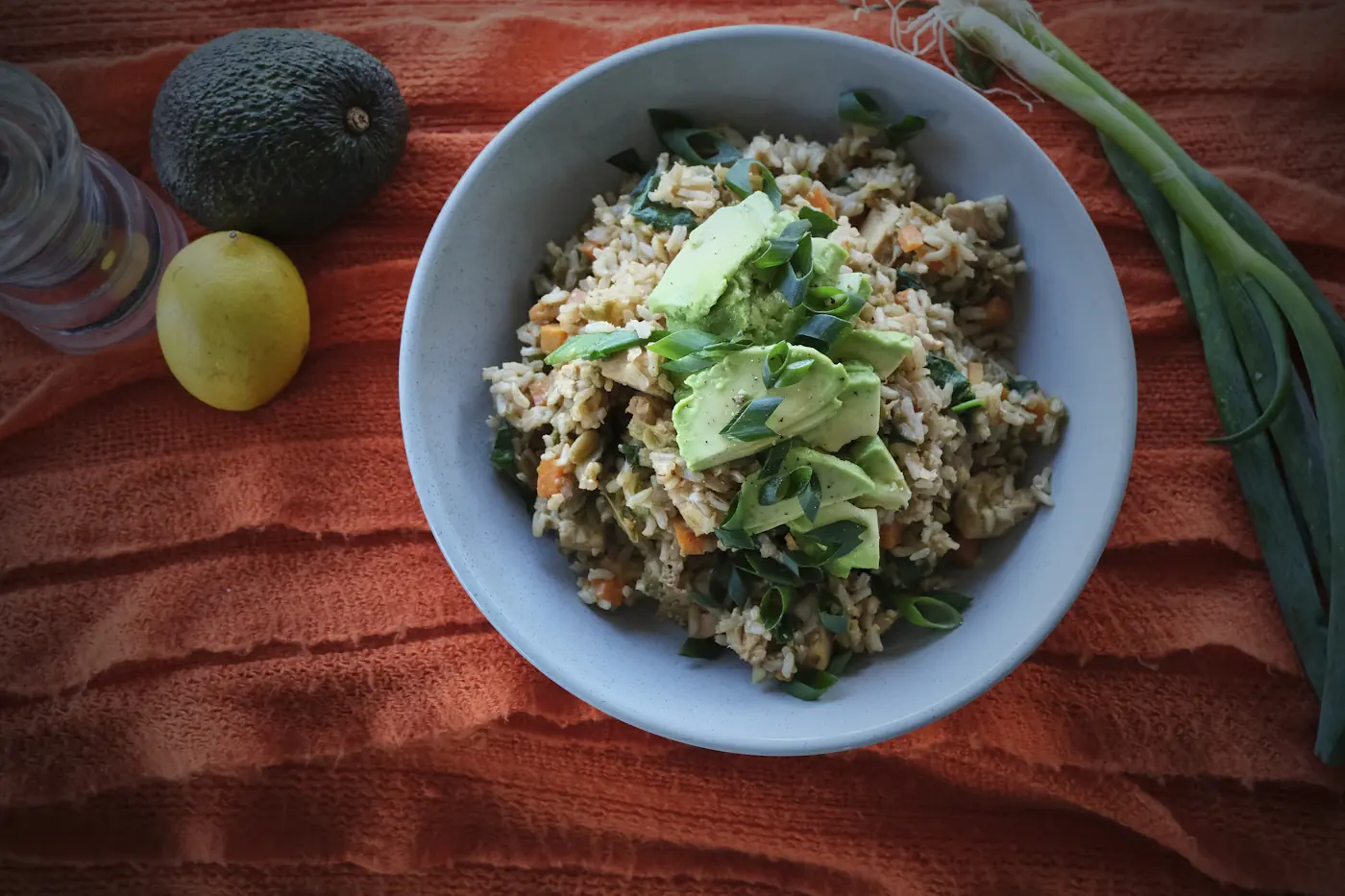
The appeal of a build-your-own meal is choice. The danger is too much choice, spread across too many bowls, with no clear idea of what belongs together. A rice-bowl supper works best when the host does some of the thinking in advance. Guests can then customize a coherent meal rather than design dinner from a collection of unrelated ingredients.
Think of the spread as a small set of useful roles: a base, a substantial topping, vegetables, a contrasting texture, and one or two finishing options. These roles can be filled in many ways. They do not require a specific cuisine or an expensive shopping list. What matters is that the components work together and remain manageable for the person preparing them.
This guide offers an original hosting framework rather than a tested recipe. Follow reliable instructions for cooking each ingredient, particularly for safe preparation and storage. The emphasis here is on menu structure, service, and choice: the decisions that turn several ordinary preparations into an easy shared supper.
Start with the people rather than the toppings
Find out who is eating and what they need. Preferences, strict dietary requirements, and appetite differences affect the design in different ways. Someone who dislikes a spicy sauce may simply leave it off. Someone with a food allergy may need a preparation arrangement that a casual shared buffet cannot provide. Ask privately and avoid treating all needs as interchangeable customization options.
Consider how guests will eat. A seated supper with sturdy bowls allows a different setup from a standing gathering where people balance food and drinks. If the meal is intended to be eaten while standing, complicated assembly and several loose toppings may be awkward. You may decide that seated service or a simpler menu is the better fit.
Tell guests what kind of meal to expect. “Rice bowls with a choice of toppings” gives a useful outline, but a little more ingredient information may help someone assess whether it suits them. Clear expectations also prevent guests from arriving after a large meal because they assumed the invitation was for snacks.
Choose a base that supports the meal
Use a rice variety and cooking method you know or a reliable recipe suited to the equipment available. The base should complement the toppings rather than compete with them. If the other components carry strong flavors, a simpler base can give the bowl balance. If the toppings are very plain, a thoughtfully seasoned base may play a larger role.
Do not assume that every guest wants the same proportion. Provide a serving utensil that makes modest portions easy and let people return for more. A very large scoop encourages everyone to build an oversized bowl before discovering how much food is available. The meal feels more flexible when portioning is straightforward.
Plan the base's timing carefully. Rice should be handled and stored safely, like other cooked food, rather than left on the counter for an extended open-ended supper. Follow current guidance and the instructions for any holding equipment. The convenience of a build-your-own meal does not remove the need for temperature control and a sensible service window.
Give the substantial topping a clear identity
Choose one main topping that makes the bowl feel like dinner. Depending on your menu and guests, that could involve beans, tofu, another suitable plant-based preparation, or a safely prepared animal protein. Use a recipe you trust for the specific ingredient. The topping should have enough character to anchor the bowl without requiring every sauce and garnish to make it interesting.
If you offer two substantial options, make sure both have a real purpose. A second option may accommodate a dietary need or provide a meaningful contrast. It should not exist merely because a longer menu looks generous. Two elaborate main toppings can double the work while leaving the group with more leftovers than it wants.
Keep serving information honest and specific. Name the ingredient and important flavorings rather than relying on broad labels such as healthy or clean. If you adapted a traditional recipe, describe the adaptation accurately. A rice bowl is a flexible serving format, not permission to attach a cultural identity to any combination that happens to contain rice.
Select vegetables for contrast and compatibility
Look at the main topping before choosing vegetables. If it is soft and richly sauced, a crisp component may add useful contrast. If it is dry or assertively seasoned, a gentler vegetable preparation can help the bowl feel balanced. Choose a small number of vegetables with different jobs rather than several that duplicate one another.
Consider how the pieces will be eaten together. Very large chunks may make a bowl difficult to manage, while tiny pieces can disappear beneath the sauce. Use preparation methods appropriate to each ingredient and the meal's format. The goal is not identical shapes but an easy spoonful or forkful that can include more than one component.
Avoid buying a wide assortment solely for color. Color can make the table inviting, but every ingredient also needs washing, preparation, a serving dish, and storage. A focused selection is easier to execute well. You can create visual interest through arrangement and contrast without turning the supper into a produce inventory.
Keep sauces from becoming a second menu
One well-chosen sauce may be enough. If you offer two, make their roles distinct: perhaps one mild and one more assertive, or one creamy and one bright. Use clear labels and appropriate utensils. Guests should understand the choices without opening several jars or asking the host to explain each one repeatedly.
Taste the sauce with the actual base and toppings, not only on its own. A strong sauce may work well in a small amount over plain rice, while a delicate sauce may disappear beside a bold topping. This simple trial helps you judge proportion and prevents the table from needing a collection of emergency condiments.
Keep optional heat separate when that suits the menu and guests. Do not assume that adding a strong component to the main preparation is the only way to make the meal interesting. Individual finishing choices can offer flexibility, but they should not conceal uncertain ingredients or create allergy risks. Shared service still requires a preparation plan appropriate to the people eating.
Use one finishing texture deliberately
A crunchy or fresh finish can make a bowl more engaging, but it should solve a specific problem. If the meal already includes a crisp vegetable, another crunchy topping may be unnecessary. If everything is soft, a suitable contrasting addition may earn its place. Think about the bowl's experience rather than its resemblance to a photograph.
Serve toppings in amounts that match how they will be used. A small garnish does not need a large bowl, which can make the table seem more crowded and encourage oversized portions. Keep replenishment nearby if needed, while preserving safe handling for the ingredient involved. Smaller serving vessels can make the entire spread easier to navigate.
Do not treat a garnish as universally suitable because it is optional. Nuts, seeds, and other additions may matter to guests with allergies, and shared utensils can complicate service. Discuss needs in advance and be honest about what the setup can support. An attractive finishing station is not a substitute for a thoughtful food plan.
An illustrative supper for six
Imagine a host planning a seated meal for six adults. After checking food needs, the host chooses plain rice, one familiar substantial topping, two vegetable components with different textures, one sauce, and one optional finishing ingredient. The menu uses recipes the host knows and fits the available stove and counter space. No component requires individual cooking after guests arrive.
The host arranges the food on a counter in assembly order: bowls, rice, main topping, vegetables, sauce, and finish. A sample combination is described briefly, but guests remain free to choose proportions. Water and other drinks sit elsewhere so the assembly area does not become a gathering point for unrelated tasks.
People fill modest bowls and take their seats, with a clear route for returning if they want more. The host replenishes manageable quantities rather than putting every reserve on display. Dinner feels generous because each choice is useful and the food is easy to access. The example does not depend on a particular recipe; its strength comes from limiting the number of decisions guests and cook must make at once.
Arrange the serving route physically
Walk through the assembly process before the meal. Can someone hold a bowl and use each utensil comfortably? Is there a place to set the bowl down briefly? Does the line end near seating, or does it force people to cross back through others waiting to serve? These questions reveal practical problems that a written menu cannot.
Keep the most frequently used items near the beginning and small finishing elements near the end. Put utensils where their handles remain accessible and where drips will not spread across clean serving areas. A spoon rest or suitable tray can help contain mess. The setup should still make sense after several guests have passed through it.
If space is very limited, consider passing a few components at the table instead of creating a buffet. Build-your-own does not require a separate station. The best arrangement is the one that gives the actual group comfortable access. A cramped buffet can feel less relaxed than a simple family-style meal with fewer dishes.
Prepare in an order that protects attention
List the components by how much last-minute work they need. Complete tasks that can be done safely ahead according to their recipes, then reserve the final period for the elements that genuinely require it. Avoid choosing several preparations that all need active attention at the same moment. A modular menu should make cooking easier, not hide a complex schedule.
Set out the correct serving dishes early and label them temporarily if that helps. This prevents a finished component from waiting while you search for a bowl. Keep a clean area for final assembly and remove ingredients once they are no longer needed. The kitchen does not need to remain pristine, but it should allow the next step to happen without a major rearrangement.
Have a simplification available. If one optional garnish becomes impractical, omit it. If a second vegetable would delay the meal, the remaining components may already be sufficient. Distinguish essentials from embellishments before cooking so you can make calm decisions when timing changes. Guests rarely miss an element they were never promised.
Prevent leftovers from becoming an unmarked collection
At the end of service, store food promptly and appropriately in suitable containers. Separate components can offer flexibility later, but too many tiny containers may become difficult to track. Combine only when it makes sense for safe storage and a realistic next meal. Label items with enough information to recognize both contents and timing.
Consider the likely use before deciding how much to prepare next time. If rice consistently remains while toppings disappear, adjust the base rather than increasing everything. If several garnishes return untouched, the menu may not need them. These observations can make the next supper both simpler and more satisfying.
Do not let an aversion to waste override safe handling. Food that has been improperly held is not rescued by an appealing lunch plan. Consult reliable guidance for storage and reheating, and use a thermometer where appropriate. The practical benefit of a modular supper is strongest when the same care extends beyond the first meal.
Check whether a second helping is easy
The route back to the food deserves the same thought as the first serving. Keep chairs and bags clear of the path, retain the necessary utensils, and explain whether guests should reuse their bowls or take clean ones. A meal intended to offer flexible portions works poorly if returning feels awkward or requires asking the host for every item.
Replenishment can also be quieter than a large initial display. Bring out additional food as needed while maintaining appropriate handling, and remove empty containers rather than letting them crowd the counter. The station should become simpler as the evening progresses. Guests can then judge what remains and choose comfortably without searching through a collection of depleted bowls.
Keep customization connected to hospitality
Offer a suggested bowl for guests who prefer not to make several decisions. A short description such as “the main topping, both vegetables, and a little sauce work well together” can be enough. Choice is welcoming when it is supported; it can feel like work when the guest has to invent the meal from scratch.
Allow preferences without commentary. Someone may take no sauce, choose a small portion, or return for more of one component. Once the menu has been planned appropriately, those choices do not need interpretation. A relaxed table lets people eat in a way that suits them while remaining part of the shared evening.
For handling and storage questions, consult USDA food-safety guidance. For strict ingredient needs, use the FDA's allergy information together with direct conversation with your guests. The strongest rice-bowl supper is a clear, considered meal with room for individual proportions, not an unlimited buffet.