TROPICAL-TRIBE
A relaxed room is not necessarily an empty room. Books, bags, tableware, and hobby supplies can all belong in a comfortable home. The difficulty is often that these objects do not have a place connected to the way they are used. They gather on the nearest surface, then require a large reset whenever somebody wants to sit down, prepare a meal, or welcome a guest.
Useful storage begins with those ordinary movements. Where does a bag land? Which reading materials travel between rooms? What must be available quickly, and what can remain elsewhere? Answering these questions before buying containers helps you create arrangements that reduce repeated work. The room can keep its warmth and personality while becoming easier to use.
This guide focuses on organization using existing possessions. It does not assess structural loading, building alterations, moisture remediation, or the safety of furniture installations. Follow manufacturer instructions and seek appropriate advice for those questions. A shelf or cabinet should be used within its intended limits; an attractive arrangement is not a reason to improvise an unsuitable support or block an essential route.
Follow one ordinary day through the room
Observe the space during a normal day before making changes. Note what arrives, what moves, and what stays out because returning it feels inconvenient. A jacket on a chair may indicate that the usual storage is too far away, while a pile of papers may contain several different decisions waiting to happen. Describe the pattern without assigning blame to the person who uses the room.
Choose one recurring point of friction as the first project. Trying to reorganize every cupboard at once can make the home less usable for several days and obscure which change helped. A small project, such as giving current reading materials a clear location, creates a result you can test. The aim is a workable routine, not a single dramatic transformation photograph.
Sort by use before sorting by appearance
Gather only the items involved in your chosen project. Separate what is used daily, what belongs elsewhere, and what needs a decision. Keep other people's possessions under their control and ask before moving or discarding them. A shared room becomes easier to manage when the system reflects the people using it rather than one person's preferred visual order.
Avoid making a miscellaneous group so large that it becomes the original problem inside a box. If several objects do not fit, identify their actual roles. Current mail, drawing tools, and chargers may share a surface but require different homes. Categories should help you retrieve something later. They do not need to be elegant labels suitable for a photograph.
Inventory the storage you already have
Look at existing drawers, shelves, cabinets, boxes, and other suitable storage before considering a purchase. Check their dimensions and condition, along with any manufacturer restrictions. A container may be useful in another room, but moving it should not create an unresolved problem where it came from. Reuse works best when the whole household arrangement remains understandable.
Measure the actual space and the objects that need to fit. A shallow drawer can be excellent for small tools and frustrating for bulky textiles. Leave room for reaching and returning items rather than packing every opening tightly. The useful capacity of storage is the amount you can use comfortably, not the maximum quantity you can force into it for a single tidy moment.
Place frequent items near their real destination
Put daily objects where their use begins or ends. A book basket beside the reading seat may work better than a beautifully arranged shelf across the room if the same three books are always in progress. An existing tray near an agreed arrival point can give small personal items a temporary home without spreading them across several surfaces.
Make sure the location remains appropriate for the objects involved. Keep sensitive papers private, follow storage instructions for products, and consider the needs of children or animals in the home where relevant. Convenience is one factor, not the only one. If the most convenient spot is unsuitable, choose a nearby alternative and make the route to it as straightforward as possible.
Give temporary items an honest category
Some belongings are genuinely in transition: a library book to return, an item awaiting repair, or a form needing attention. They do not belong in permanent display or deep storage. Designate a small existing place for such items and decide when you will review it. A temporary category is useful only if it leads to an action rather than indefinite accumulation.
Keep the next action visible in a brief note if needed. Return, repair, and discuss are more useful distinctions than deal with later. Do not let the transition area expand automatically when it fills. Treat that as a signal to review the contents or reduce incoming tasks. Another container may conceal the backlog without making the decisions any easier.
Balance open and closed storage deliberately
Open storage can keep frequently used objects easy to see, while closed storage can reduce visual competition from less attractive supplies. Neither is inherently better. Choose according to the room's purpose, the objects, and how much routine maintenance you want. A visible shelf can be practical when it contains a manageable collection rather than a display that must be rearranged every time something is used.
Use closed storage for items whose appearance does not contribute to the room but whose function matters. Keep their location clear to the people who need them. If doors and lids make retrieval so awkward that belongings stop being returned, revise the setup. A system that looks calm only while unused will create more repeated tidying than one designed around ordinary movement.
Let materials serve a practical role
Natural-looking baskets, wood, and woven textures can suit a relaxed interior, but appearance alone does not establish suitability or responsible sourcing. Use the items you already own where they fit the task and follow their care instructions. A decorative basket with a rough interior may be inappropriate for something delicate, while a plain existing box may perform the job well.
Avoid treating storage as a way to purchase a whole visual identity. The room can feel coherent through repeated colors, clear placement, and a few familiar materials without requiring every container to match. If a future purchase is necessary, identify the functional gap first. Knowing the dimensions, contents, and intended location gives you a better basis for choosing than an appealing photograph of an empty room.
Make shared storage legible
Explain a new arrangement to everyone who uses it and ask whether the categories make sense to them. A system known only to its designer creates dependence rather than order. If several people need the same supplies, choose a location and grouping they can understand without asking where each item has moved.
Use simple labels where they genuinely help. They can be temporary paper notes inside a drawer rather than a permanent labeling project. Avoid categories so specific that normal use constantly breaks them. Shared storage should tolerate small variations while preserving the main distinction between groups. Review it after people have tried it, because their difficulties may reveal a design issue rather than a lack of cooperation.
Protect the surfaces that do useful work
Decide which surfaces need to remain available: part of a dining table, a preparation counter, or a place to set down a drink. Give displaced belongings a suitable home rather than simply moving them to the next horizontal surface. A clear area earns its place through function, not because every room must resemble an unoccupied interior photograph.
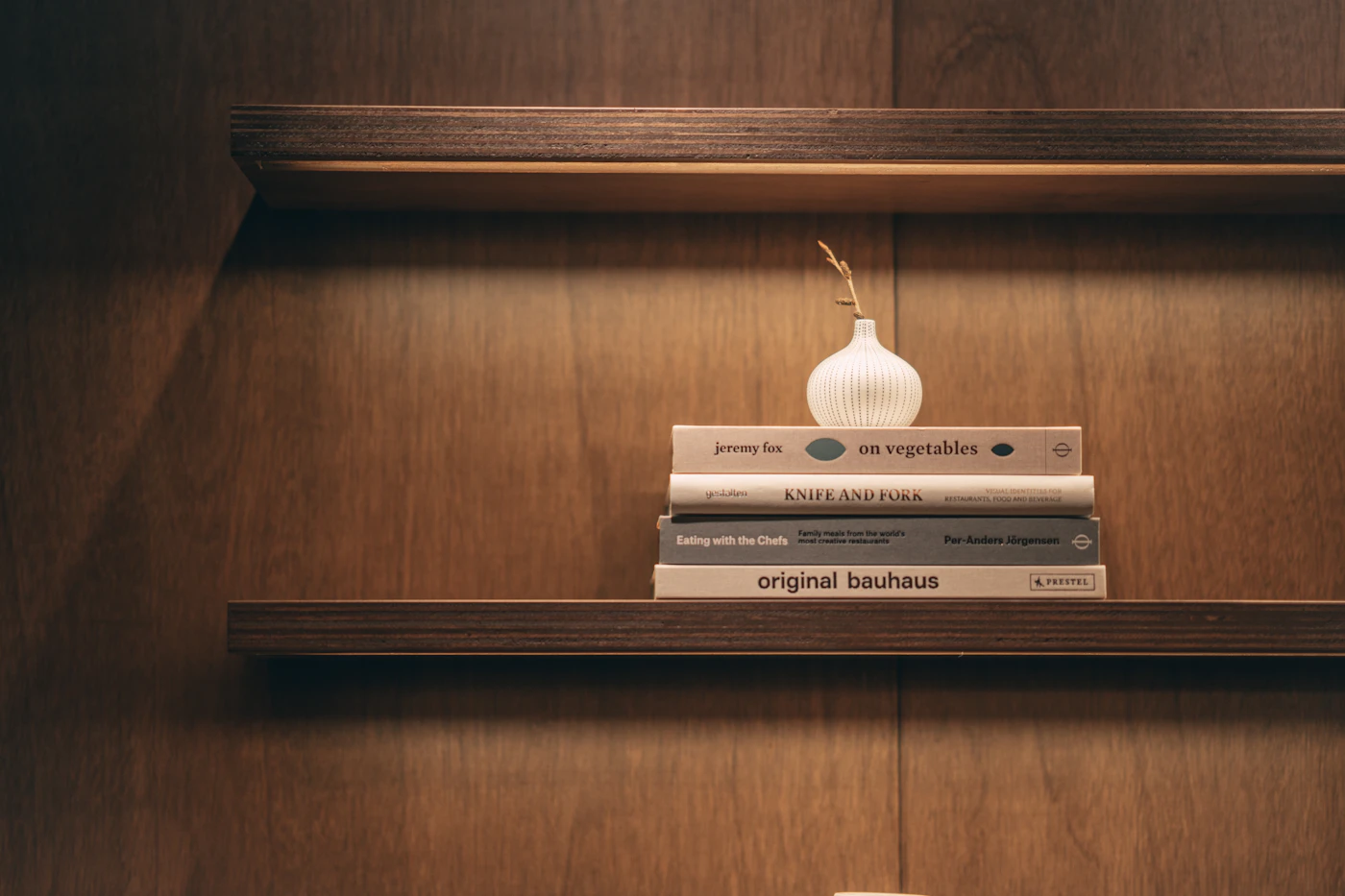
Leave some display where it contributes to enjoyment. A small collection of books or familiar objects can make a room feel personal without preventing its daily use. The balance may differ between rooms and households. Ask whether you can perform the intended activity comfortably, then adjust the amount of display around that practical test rather than pursuing a universal standard of minimalism.
Store collections at a scale you can enjoy
If you have a collection, choose which part you want to see regularly and what can be stored appropriately elsewhere. Rotating a few pieces may make them easier to appreciate, but only if the stored portion has a suitable location and the rotation feels enjoyable. You do not need to turn a personal collection into an ongoing exhibition schedule.
Keep information that matters with the object where practical: care notes, maker details, or the story you want to remember. Do not invent provenance to make a display sound more interesting. A personal memory can be meaningful on its own. Storage should preserve your relationship with the collection, not pressure you to explain it through a more impressive narrative than the evidence supports.
Try a fictional small-living-room reset
Imagine a small living room where books, mail, and drawing supplies gather on the coffee table. The household chooses to keep one section of that table available. Current books move to an existing basket beside the main chair, drawing tools go into a suitable shallow drawer, and mail receives a small temporary tray with a regular review point.
No new furniture is needed. After a week, the household finds that the drawer is inconvenient for one person who draws at the dining table. They move that person's compact supply box to an agreed nearby shelf. This fictional example shows why the first arrangement is a trial. The useful result is not permanent perfection; it is less repeated work and a clearer place for each ongoing activity.
Keep guest needs separate from permanent clutter
If the room sometimes hosts visitors, identify the few items that must be available for that use. Store them in a known suitable place rather than leaving the whole room permanently arranged for an occasional event. Check that retrieving them does not require emptying several unrelated cupboards. A clear guest setup can be modest and still welcoming.
Do not use guest preparation as a reason to hide important everyday possessions in places nobody can remember. If you need to move something temporarily, keep the grouping intact and make the return simple. The home should remain usable after visitors leave. A successful reset allows you to resume ordinary routines without spending the following day searching for objects moved in a hurry.
Build a short return routine
Choose a small moment when loose items can return to their places. It might happen before the evening meal or when an activity ends. Keep the routine focused on the area you changed rather than turning it into a whole-home inspection. When returning objects is easy, a few minutes may be enough to preserve the useful surface.
Watch which items repeatedly remain out. The cause may be an awkward lid, an overfilled drawer, or a category that does not match actual use. Adjust the storage before asking for more discipline. A good arrangement lowers the effort of maintaining it. If it requires constant reminders, the system itself deserves review alongside the household's routines.
Reassess before adding more capacity
When storage fills, ask what changed. You may have a new activity, an expanded collection, or items that no longer belong in the room. Review the contents before purchasing another unit. More capacity can be useful, but it also occupies floor space and creates another place to maintain.
Consider whether a smaller selection would support the activity just as well. This is a personal choice, not a requirement to discard belongings. You can relocate, share, repair, or retain items according to your circumstances. The essential question is whether the room's storage still serves the life happening there. A relaxed home comes from making those relationships clear enough that objects can be used and returned with little friction.
Photograph the arrangement for your own reference
A private image of an open drawer or shelf can help you explain a new system to other household members, provided it does not expose sensitive information. Use it as a temporary aid rather than a standard the room must match every day. The real test is whether people can find and return the objects they use. Update the reference if the arrangement changes, or remove it once the system is familiar enough to need no explanation.
Let the room remain lived in
There will still be a book open on a chair, a project in progress, or a bag waiting briefly by the door. Those signs of use do not invalidate the arrangement. Useful storage provides a way to restore function when needed; it does not prevent ordinary activity from becoming visible.
Keep the changes that make the room easier to inhabit and release the ones that demand too much upkeep. Warm materials, personal collections, and clear working areas can coexist when their roles are understood. The result need not look newly decorated. It can look like your own home, with familiar belongings placed thoughtfully enough that daily life has a little more room to move.