TROPICAL-TRIBE
Quiet travel is not the same as travel without planning. On Vieques, a restful stay depends on knowing how you will reach the island, how you will move between your lodging and the places you want to visit, and what you will do when weather changes a water-based activity. Those decisions can be made before departure, leaving the island itself free from constant negotiation. The result is a trip with fewer moving parts and more time to notice them.
Vieques sits off Puerto Rico's eastern coast, but its separate transport links and daily rhythms deserve their own itinerary. Resist attaching it to the end of a mainland visit without counting the connection. A beach that looks empty in a photograph still requires access, supplies, and a return plan. A nighttime excursion still needs a manageable next morning. Small details are what allow a quiet holiday to remain quiet.
Count the journey in real stages
Write the arrival route as a sequence of actual tasks: landing in Puerto Rico if relevant, collecting bags, traveling to a ferry terminal or connecting airport, checking in, crossing, finding onward transport, and reaching your accommodation. Avoid reducing this to the duration of the boat ride or flight. The waiting and handoffs are part of the day even when everything operates smoothly.
Compare ferry and air options using current operator information. Look beyond the headline fare to departure location, baggage terms, booking availability, ground transfers, and cancellation conditions. If you are connecting from a long flight, an overnight pause on the main island may be more comfortable than relying on a tight sequence. A fast crossing does not make an uncertain connection reliable.
Do the same exercise in reverse for departure. If you have an important flight home, leave meaningful room between the island connection and the airport check-in requirement. How much room is appropriate depends on the services you book and your ability to change plans. The useful question is not whether somebody else once made a short connection. It is what your group will do if this connection does not work.
Choose the evening before choosing the room
Accommodation searches often start with a pool or a view. For a quieter Vieques visit, start with the evening you want. Would you like to walk to dinner, cook something simple, or return from a guided outing to a room where everything is already arranged? A property that supports that evening can be more valuable than one with a more dramatic photograph but awkward transport.
Consider the differences between staying near Esperanza, staying near Isabel Segunda, and choosing a more secluded property. Do not assume every listing near a named area is comfortably walkable to its services. Ask about the actual walking route, lighting, gradients, and traffic. If you will need rides, confirm how they are arranged and whether they are practical at the hours you expect to travel.
Quiet is also a specific accommodation question. Ask about nearby entertainment, road noise, shared spaces, and the location of your room within the property. No host can guarantee silence, and an island community is not a soundstage. The goal is to choose a setting compatible with your sleep needs rather than expecting normal local life to disappear around your vacation.
Reserve mobility before filling the days
Determine your transport arrangement before saving a long list of beaches. A rental vehicle, organized tour, and prearranged rides each produce a different trip. Read rental conditions carefully, including permitted roads, insurance arrangements, parking, and vehicle return timing. Do not assume that a vehicle advertised as adventurous is permitted or suitable for every route you find online.
If you prefer not to drive, organize the stay around fewer destinations with dependable transport. Ask a tour operator exactly where pickup occurs and how the return works. For a taxi or driver, confirm the meeting place and contact method. Mobile service and battery life should not be the only things standing between an isolated beach visit and a workable ride home.
Build a small daily travel kit once, then leave it ready: water, food appropriate for the outing, sun protection, necessary medication, a charged phone, a rubbish bag, and any gear the operator specifies. Keep valuables to a minimum and follow local advice about securing them. Preparation is less tiring when it becomes one repeated habit instead of a new packing discussion every morning.
Give each beach visit a purpose
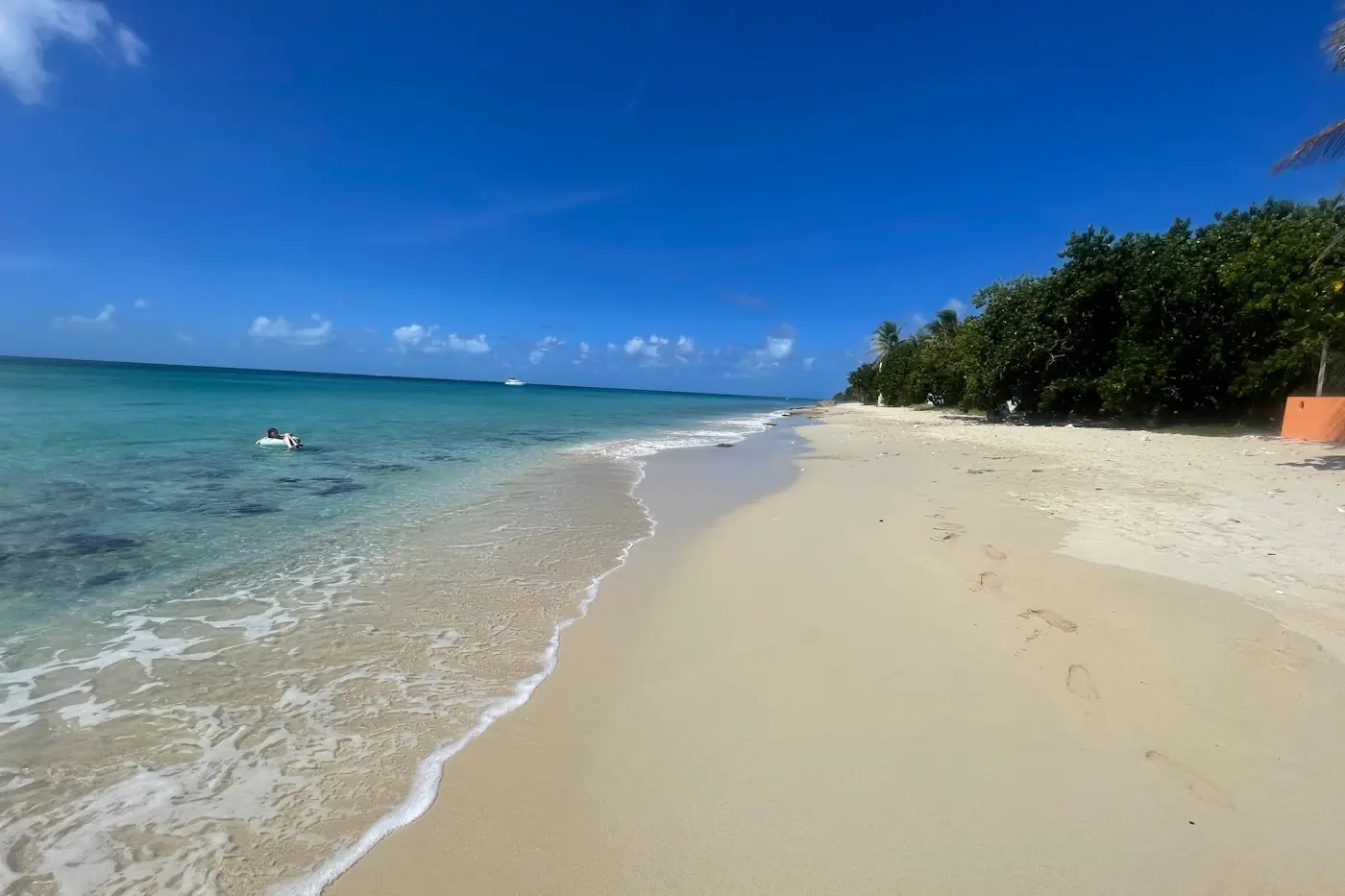
A beach day can mean swimming, reading in shade, photographing the shoreline, or watching the changing light. Name the purpose before choosing the place. A remote stretch of sand might suit photography but lack the facilities needed for a long day. A beach with convenient services may better support a traveler who needs regular shade or easy access to a bathroom.
Check current access information for beaches within the Vieques National Wildlife Refuge and follow all posted restrictions. Protected land can include areas that are not open to visitors. Do not follow an informal track because it appears in a social media post or because another car went that way. Use authorized access, leave unfamiliar objects undisturbed, and make a different plan if an area is closed.
Water conditions determine whether swimming belongs in the visit. Observe warnings and seek appropriate local guidance; an attractive color is not a safety assessment. If conditions are unsuitable, enjoy the shore from a safe location or change beaches only after checking the alternative. A successful beach day does not need to include entering the water. That expectation is especially helpful for groups with mixed swimming confidence.
Approach the bioluminescent bay as a living environment
A bioluminescent bay outing is often the central reason for a Vieques stay. Treat it as a guided nature experience with conditions, not as a guaranteed special effect. Visibility can vary, and operator rules, availability, weather, and access requirements can change. Contact a properly authorized operator, understand the physical demands, and ask what happens if the outing is canceled or altered.
Choose your evening with the rest of the trip in mind. A late activity pairs poorly with a rushed early departure. Place it on a night that allows a relaxed meal beforehand and sufficient sleep afterward. If the experience matters greatly to you, consider whether a stay with another potential evening offers useful flexibility, while recognizing that a second date is never a guarantee.
Ask practical questions rather than asking the operator to promise brightness. What clothing and footwear are recommended? Will you be paddling, and for how long? How are belongings protected? Are there restrictions that affect your group? Follow the briefing about lights, photography, water contact, and conduct. The best memory may be a quiet observation rather than a phone image, and respecting that can make the outing more rewarding.
Let local history interrupt the beach rhythm
Vieques is more than an offshore retreat. Its communities have a history that includes colonial structures and the long struggle surrounding military use of the island. Make room for an appropriate cultural or historical visit, such as checking the current visitor arrangements at Fortín Conde de Mirasol. Read interpretation carefully and let it complicate the simplified holiday picture.
Do not seek stories from residents as though every conversation is an interview. A guide or museum visit provides a context in which interpretation is welcomed and compensated. Everyday interactions deserve ordinary courtesy: greet people, wait your turn, ask before photographing, and accept that somebody working has tasks other than explaining their home to visitors.
An hour spent understanding a place can change how you behave during the rest of the stay. A closure becomes less of an inconvenience when you appreciate that land access has consequences beyond your itinerary. A town becomes more than the location of a restaurant. Cultural attention is not a separate virtuous activity added to the trip; it is part of learning where you are.
Plan meals for the actual rhythm of the island
Find out what is available near your lodging and when, particularly on arrival day and after evening activities. Opening hours and service patterns can change, so verify rather than relying on an old screenshot. Keep a simple fallback meal or snack available when appropriate. Being flexible is easier when hunger is not making every delay feel urgent.
If you have a kitchen, make it support the holiday rather than dominate it. Breakfast ingredients, fruit, and easy lunches may be sufficient. Check storage and cooking equipment before buying perishables. For dining out, leave time to enjoy the meal without treating slower service as a defect in the destination. If you have a timed pickup afterward, communicate that early and order accordingly.
Dietary needs should be discussed directly with the restaurant or accommodation. Do not assume that a dish is vegetarian, gluten-free, or free of an allergen because of its name. A short, clear explanation is more effective than a complicated last-minute request. Travelers with strict requirements may benefit from carrying familiar suitable snacks, especially on days involving multiple transport stages.
An illustrative three-night stay
Picture a traveler who wants one guided bay outing, two beach sessions, and enough time to read. On arrival afternoon, they go directly to their accommodation, confirm transport for the next morning, and take a short local walk. Dinner is nearby. They do not try to squeeze a distant beach into the remaining daylight simply because the crossing finished earlier than expected.
The first full day centers on a beach selected for suitable access and current conditions. They take supplies and agree on a return time. After a rest, they have an early meal and join the prebooked bay excursion if it operates. The next morning begins slowly. A cultural visit or time in town provides a change of focus before another shore outing in the afternoon.
Departure day contains breakfast, packing, the accommodation checkout, and the connection. This sounds sparse on paper, but the stay includes the moments many visitors actually want: an unhurried morning, a conversation over lunch, a beach visited without clock watching, and an evening with no need to drive elsewhere afterward. The outline is hypothetical and should be adapted to current services and individual needs.
Build a weather alternative you would willingly choose
Do not write beach day in every square of the calendar and hope that flexibility will appear when it rains. Identify a few alternatives while planning: a museum or cultural stop with confirmed hours, an extended meal, a sheltered place to read, or simply a rest period at accommodation you enjoy. Indoor options can be limited, which makes the quality of your base more important.
If a water activity is canceled, avoid immediately buying another outing just to fill the gap. Ask whether conditions affect other activities too, then choose a genuinely suitable alternative. A cancellation is information about the day, not a challenge to find an operator willing to ignore the same conditions. Keep the financial and emotional value of the trip spread across more than one experience.
Allow the island to be ordinary sometimes. There will be groceries, maintenance, traffic, and people going to work. Quiet travel is not the absence of those things; it is your willingness to stop demanding a dramatic scene every hour. A place becomes more interesting when it is allowed to exist beyond its best photographs.
Leave with a lighter practical footprint
Bring reusable items only when you will actually use and carry them. A bottle, compact food container, or simple bag can reduce repeated purchases, but elaborate equipment that never leaves the room helps nobody. Pack out everything you bring to undeveloped places and avoid leaving food behind for wildlife or roaming animals. Admiring an animal does not require feeding or approaching it.
Respect water and energy use at your accommodation. Follow the host's instructions, report problems promptly, and do not assume that a tropical setting makes utilities unlimited. Where possible, direct spending toward services you value: a knowledgeable guide, a local meal, or a well-run small lodging. The useful measure is whether your choices support the experience you came for without making unnecessary demands on the place.
Useful planning sources
Start with Discover Puerto Rico's Vieques overview for orientation. Check Puerto Rico Ferry for its current booking information, and Vieques National Wildlife Refuge for authorized access and visitor guidance. Confirm the details of a bay outing with the operator you select; this article does not guarantee availability, water conditions, or bioluminescence visibility.