TROPICAL-TRIBE
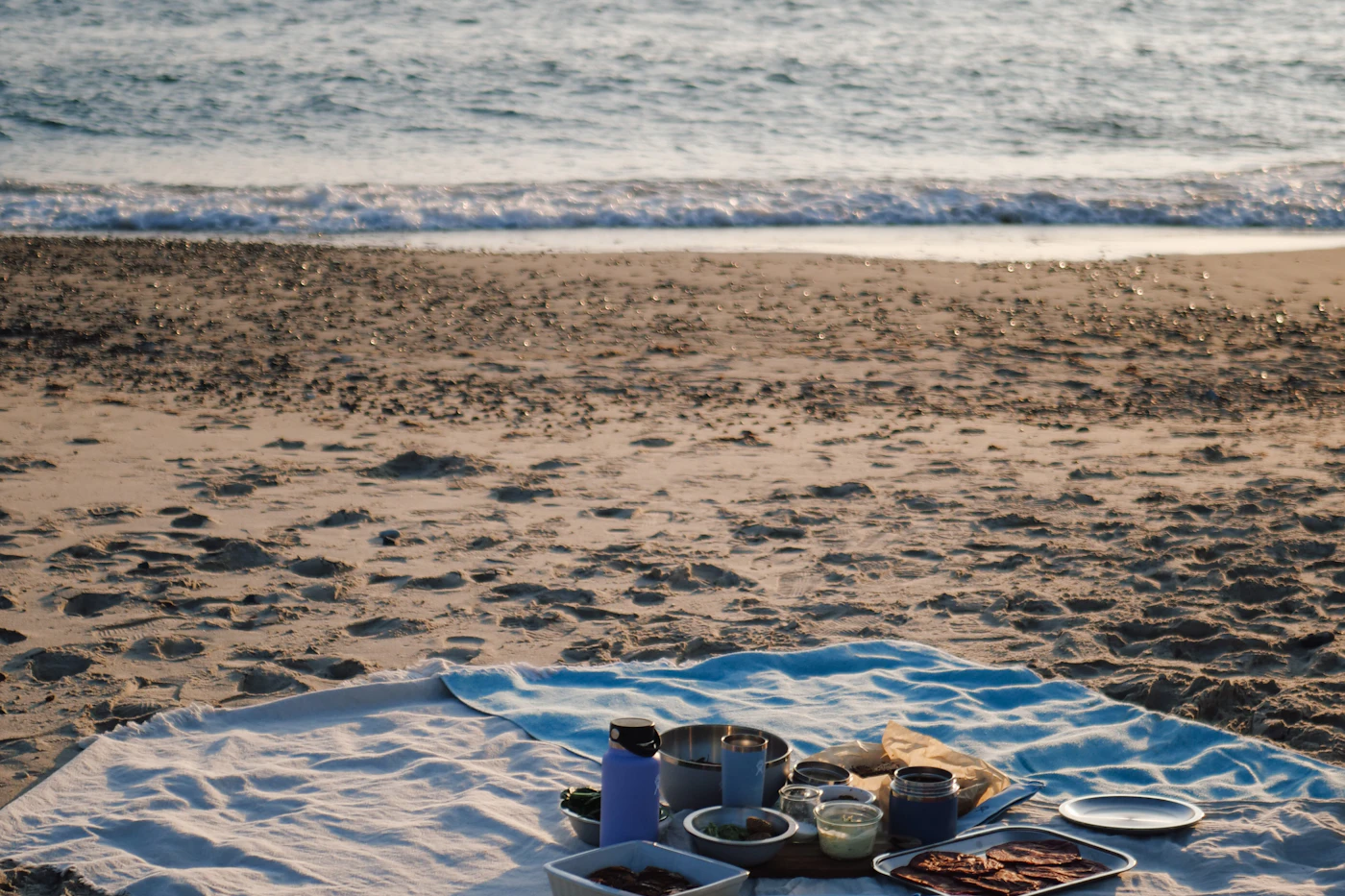
The picnic in a photograph usually begins after the difficult work is finished. Food is arranged, the blanket lies flat, and no one is carrying a cooler across soft sand. A real shore picnic includes all of those earlier steps, plus the question of how everything gets home afterward. Planning the whole sequence is what makes the meal feel effortless.
Start with the eating situation, then choose the food. A table beside a public waterfront supports a different menu from a blanket reached by a long walk. Shade, wind, refrigeration, handwashing, and the group's comfort all influence what will work. The most successful spread is the one that fits those conditions without turning the outing into a catering operation.
Decide where the meal actually happens
Choose the precise picnic location rather than simply naming a beach. Check whether eating is allowed, whether tables can be reserved, and whether the site has rules about glass, cooking equipment, alcohol, tents, or waste. A public beach and an adjacent picnic area may have different restrictions.
Compare the route from arrival to the eating place. A cooler that feels manageable beside the car may become awkward on steps or soft sand. If someone needs a firm route, supportive seating, or an accessible table arrangement, confirm those details before planning the menu. The setting should welcome the group instead of asking people to adapt silently to an unsuitable choice.
A table near the shore can deliver the pleasure of eating outdoors with less effort than a beach blanket. There is no need to place the meal directly on the sand to make it feel coastal. A sea view, a short permitted walk afterward, and an unhurried pace may provide everything the group wanted.
Build the menu around handling
Imagine serving each item at the actual location. Does it require cutting, mixing, balancing a bowl, or passing several utensils? Will it spill easily? Can a person eat it comfortably from their seat? These questions identify problems that a list of attractive ingredients can hide.
Choose a few components with different roles rather than many dishes doing the same thing. One main item, a simple accompaniment, a manageable fruit option, and drinks may be enough. Keep flavors interesting through ingredients prepared appropriately before departure, not through complicated assembly beside the water.
Avoid making the meal depend on a fragile presentation. A carefully arranged platter can become difficult to transport and awkward to protect from wind or animals. Containers that close securely may look less theatrical, but they let the food remain organized until the moment it is served.
Ask about food needs before shopping
Invite each person to share relevant dietary needs and preferences privately if they wish. Do not assume that a familiar menu is suitable for everyone. Clarify which needs require strict ingredient or cross-contact controls and which are flexible preferences. If you cannot reliably meet a requirement, agree on a practical arrangement with the person concerned.
Keep ingredient information available for prepared foods. A container without its original label can create unnecessary uncertainty at the picnic. Where appropriate, retain packaging or a clear ingredient note. Do not promise that a dish is allergen-free merely because an ingredient was not intentionally added.
Make participation easy without making one person feel responsible for educating the whole group. A guest may prefer to bring a suitable portion themselves, but that should be their choice rather than an automatic expectation. Agree on the plan early enough that everyone can arrive knowing there is something appropriate to eat.
Treat temperature control as a menu constraint
Food that requires cooling needs a reliable cold-storage arrangement throughout transport and serving. The FDA advises keeping cold food at 40°F or below and limiting time outside temperature control; its guidance uses a two-hour limit, reduced to one hour when outdoor temperatures exceed 90°F. Consult the complete guidance for the food and circumstances involved.
Those limits are not targets for extending lunch as long as possible. Plan to serve manageable amounts and keep the rest properly stored. A long scenic detour before eating may be incompatible with a menu built around perishables. If you cannot maintain suitable storage, change the menu or choose a nearby food service instead.
Use an appropriate thermometer and equipment rather than judging safety by touch, smell, or appearance. A cooler is useful only when packed and managed effectively. Keep its role clear: it protects the food, while a separate arrangement for frequently accessed drinks can reduce unnecessary opening where that is practical.
Reduce preparation at the shore
Complete suitable washing, portioning, and preparation before departure, using proper food-handling practices. The picnic site should mainly require opening containers and serving, not recreating a kitchen. This reduces the number of tools, surfaces, and cleaning steps that have to work outdoors.
Pack utensils according to actual use. A serving spoon for each shared dish, a knife only if genuinely needed, and a sensible number of reusable containers can be enough. Do not bring an entire drawer of accessories merely because the meal is outside. Every extra item must be carried, kept clean, and accounted for afterward.
Separate food equipment from sandy or wet belongings. A dedicated bag for clean utensils and another for used items makes the return easier. Keep any raw ingredients away from ready-to-eat food according to current food-safety guidance; for a simple shore picnic, avoiding on-site raw-food preparation often removes unnecessary complexity.
Assign the carrying before leaving
Shared picnics become stressful when one person arrives with both the food and the expectation of carrying everything. List the main loads: food storage, seating or blanket, drinks, and personal bags. Allocate them according to ability and willingness, then test whether the load is realistic for the approach.
If the carrying plan feels awkward, revise the menu or location. A second trip across the beach may be more demanding than expected, especially in heat or crowds. Choosing a nearby table can solve more problems than buying another specialized carrier. Practical elegance often means removing a requirement.
Keep personal essentials personal. Each participant should know what they need to bring, while shared items have a named owner. A simple message listing responsibilities prevents duplicate equipment and missing necessities. The aim is not rigid organization; it is avoiding the assumption that someone else has handled an essential detail.
Make seating part of hospitality
A blanket is not comfortable or usable for everyone. Ask what seating arrangement works before making it the default. Some people may prefer or require a chair, a stable table, back support, or space for a mobility device. Those needs should shape the location from the beginning.
Arrange the group so that conversation and food are accessible. Do not place the person with the most constrained movement at the edge of the gathering while shared dishes circulate beyond reach. A little thought about the physical arrangement can make the meal feel more welcoming than any decorative detail.
Check whether portable seating is permitted and whether it can be used appropriately at the site. Avoid blocking public paths, access mats, or beach operations. If the available area is too crowded for the planned setup, choose a smaller arrangement or the researched alternative rather than expanding into shared circulation space.
Plan for clean hands and a usable surface
Confirm what handwashing facilities are available and prepare an appropriate arrangement when they are not. Consult current food-safety guidance rather than assuming that a quick rinse in the sea or a wipe on a towel is sufficient. Eating outdoors still requires attention to clean hands, utensils, and surfaces.
Keep food covered until it is needed. Wind can turn napkins, lightweight packaging, and loose ingredients into a problem quickly. Use containers and serving methods suited to the setting, and avoid leaving open food while the group wanders away for photographs or a walk.
Do not use the beach itself as an extra worktop. A stable permitted table or a suitable clean serving surface simplifies the meal. If there is nowhere to manage a particular dish comfortably, that dish may belong at home. The menu should be designed around the site rather than asking the site to become a kitchen.
A practical example for four adults
Imagine a hypothetical group meeting at a public coastal picnic area with a confirmed table and nearby facilities. They choose a main item that can be portioned in advance, a vegetable accompaniment, fruit prepared and stored appropriately, and drinks. The menu is deliberately modest so that eating does not require continuous assembly.
One person brings the properly packed food cooler and serving utensils. Another handles drinks and clean cups. The remaining participants bring personal necessities and the agreed cleanup supplies. Before leaving, everyone knows the entrance, the meeting time, and the indoor alternative if weather makes the picnic unsuitable.
At the site, the group checks notices, sets up within the permitted area, and serves only what is needed. After eating, food is handled according to its storage requirements, waste is contained, and used equipment is packed separately. A short walk follows only after the meal and belongings are secure. The sequence works because each stage has a clear end.
Keep the mood easy when something changes
A picnic can remain enjoyable when a table is occupied, wind increases, or one person arrives late, provided the plan has some flexibility. Identify which elements are essential and which are decorative. Suitable food storage and access matter; an exact arrangement of plates does not.
If the preferred location is unavailable, use a verified alternative rather than wandering with food in search of a perfect view. If conditions make outdoor dining unsuitable, move to an appropriate indoor option or return home. Follow official weather guidance, particularly when thunderstorms or other hazards are involved; an open-sided shelter is not automatically a safe refuge.
Avoid treating a change as a failure of the organizer. Outdoor meals depend on shared space and changing conditions. A calm revision can become part of the pleasant memory, especially when the group values being together more than reproducing a planned image.
Leave wildlife out of the menu
Keep food away from birds and other animals, and do not offer scraps. Feeding changes the encounter from observation to interference and can create problems for other visitors. Secure containers while eating and during cleanup, following any additional site requirements.
Do not assume that fruit peel or other organic waste belongs on the shore. Take food waste to the appropriate disposal point or carry it out as required. A small scrap left behind may seem insignificant to one group, but many such decisions alter a shared place.
If animals approach, follow local guidance and avoid turning the moment into entertainment. Do not lure them closer for a photograph. A picnic should occupy a permitted human space while leaving the surrounding habitat to continue without being recruited into the meal.
Give leftovers an honest decision
Before packing, assess whether food has remained within appropriate storage conditions. Follow official guidance and discard anything that cannot be kept safely. Do not let the desire to avoid waste become a reason to save food whose handling history is uncertain.
Prevent that dilemma through smaller portions and staged serving. Food that remains properly stored is easier to manage than a large display left open for the entire afternoon. Keep a note of what was actually eaten so that the next picnic can be planned more accurately.
Use containers that close for the return, and separate wet or dirty equipment from personal belongings. A clean departure is easier when it was considered before shopping. The final packing should be a simple reversal of the setup, not an improvised search for somewhere to put leaking dishes and loose rubbish.
Finish with a small site check
Look under the table or blanket and around the edges of the gathering area for caps, ties, scraps, and other small items. Return any movable public equipment according to site rules. Leave access routes clear and carry everything to the appropriate destination rather than creating a pile beside a full bin.
Once home, clean and store equipment promptly and note what you would simplify next time. Perhaps the extra dish went untouched, the table was more comfortable than a blanket, or a smaller load would have suited the walk. Those observations create a picnic routine that improves through use instead of expanding through purchases.
The pleasure of a shore picnic is ordinary and generous: a shared meal, moving air, a view, and time that does not feel rushed. Good logistics protect that simplicity. They let the food arrive properly, make the space welcoming, and ensure that the coast looks as cared for after the meal as it did before.
Food-handling reference
Consult the FDA's guide to handling food safely while eating outdoors for detailed transport, temperature, cleanliness, and serving guidance. Check the picnic site's current rules separately before planning the outing.