TROPICAL-TRIBE
The busiest moment in a beach house may be the first minute after everyone returns. Someone carries a tote, someone wants a drink, shoes are sandy, and a damp towel lands on the nearest chair. The entryway receives the entire outing before anyone has decided what should happen next. A useful design gives those decisions a place and an order.
This is not a problem solved by buying more baskets. Baskets can help, but they can also hide damp textiles, abandoned sunscreen, and objects nobody remembers owning. Start by tracing the arrival process. Separate things that need immediate attention from things that can stay near the door, and keep the route through the home clear enough for people carrying awkward bags.
Watch one real arrival before redesigning
Observe what happens when the household comes home from an outing. Where do people pause? Which objects are put down first? What is carried farther into the house because no obvious place exists? These details provide a better brief than an empty-entryway photograph taken before anyone uses it.
Write a short sequence: shoes come off, keys are set down, towels need attention, bags are unpacked, and reusable bottles move to the kitchen. Your sequence may differ. The purpose is to identify actions rather than objects. Once you understand the actions, storage choices become more specific and less likely to turn into decorative clutter.
Include the less pleasant details. Perhaps a bag leaks, a door cannot open fully, or two people trying to remove shoes block everyone else. These are design opportunities. A small change in where the first object lands may improve the entire arrival more than a large storage unit positioned in the wrong place.
Keep the essential route visibly clear
The entry is a passage before it is a display. Check door swings, circulation, required access, and any applicable building rules. Avoid placing storage where it obstructs an exit, equipment, or the route people naturally use. A bench that looks perfectly scaled in a photograph may still narrow the space too much when someone sits on it.
Test the arrangement while carrying the largest ordinary bag. Open the door, step inside, turn, and set the bag down. Then imagine another person entering behind you. This simple rehearsal reveals where furniture needs to move or where a landing surface would be useful.
Use stable furniture and appropriate installation methods for hooks or shelves. Follow load limits and anchoring instructions, particularly where bags may be heavy. Do not rely on improvised adhesive solutions for loads the product is not designed to carry. In a rental, obtain permission for changes and choose a setup that can be used safely within the rules.
Give damp items a separate next step
Wet towels and swimwear need a clear destination according to their care requirements and the home's available facilities. The entryway may be a brief sorting point, but it should not become long-term storage for damp textiles in closed containers. Decide where those items will be handled before guests arrive or the first beach day begins.
Explain the arrangement simply. A guest should not have to guess whether a decorative basket is intended for clean towels, laundry, or spare blankets. A small clear label can be useful in a shared vacation house, especially when several people are arriving at once and the host is not standing at the door.
Protect surfaces appropriately and respond to spills promptly. If the building has moisture problems, address them through the responsible owner or a qualified professional rather than treating storage as a remedy. The organization plan should keep routine items manageable without concealing a maintenance issue behind a row of attractive containers.
Use a shoe zone that can be cleaned
Decide how many pairs need to remain at the entrance. A household may need space for current outdoor shoes, not every pair owned. Limiting the zone to active use prevents it from expanding into a permanent shoe collection. Store occasional footwear elsewhere if the home has suitable space.
Choose surfaces and containers according to their intended use and cleaning instructions. A mat should lie safely and not interfere with the door. A tray should be easy to remove and clean without spilling its contents across the room. Avoid stacking footwear so densely that the lower pairs become difficult to retrieve.
Provide a practical way to sit if people need one, but only if the space can accommodate it without obstructing movement. A stable seat placed nearby may work better than a narrow bench forced into the doorway. The location should support the action comfortably, especially for guests whose mobility needs differ from yours.
Create a landing place for small important things
Keys, sunglasses, wallets, and room-access cards need a predictable home. A small tray or drawer can work if it is positioned where people naturally pause. Keep it separate from damp items and food. The purpose is quick retrieval, so avoid filling it with decorative objects or miscellaneous paperwork.
In a shared house, decide whether everyone uses one area or whether individual spaces would prevent confusion. Clearly distinguish house keys from personal belongings. Do not display sensitive access information publicly or leave valuables where they are easily visible from outside. Practical organization includes a little attention to privacy and security.
Check the landing place at the end of the day. It can quickly become a repository for receipts, bottle caps, and unfamiliar objects. A brief reset keeps important items visible. If the tray constantly overflows, investigate what is arriving there rather than simply replacing it with a larger tray.
Unpack the bag instead of storing the outing
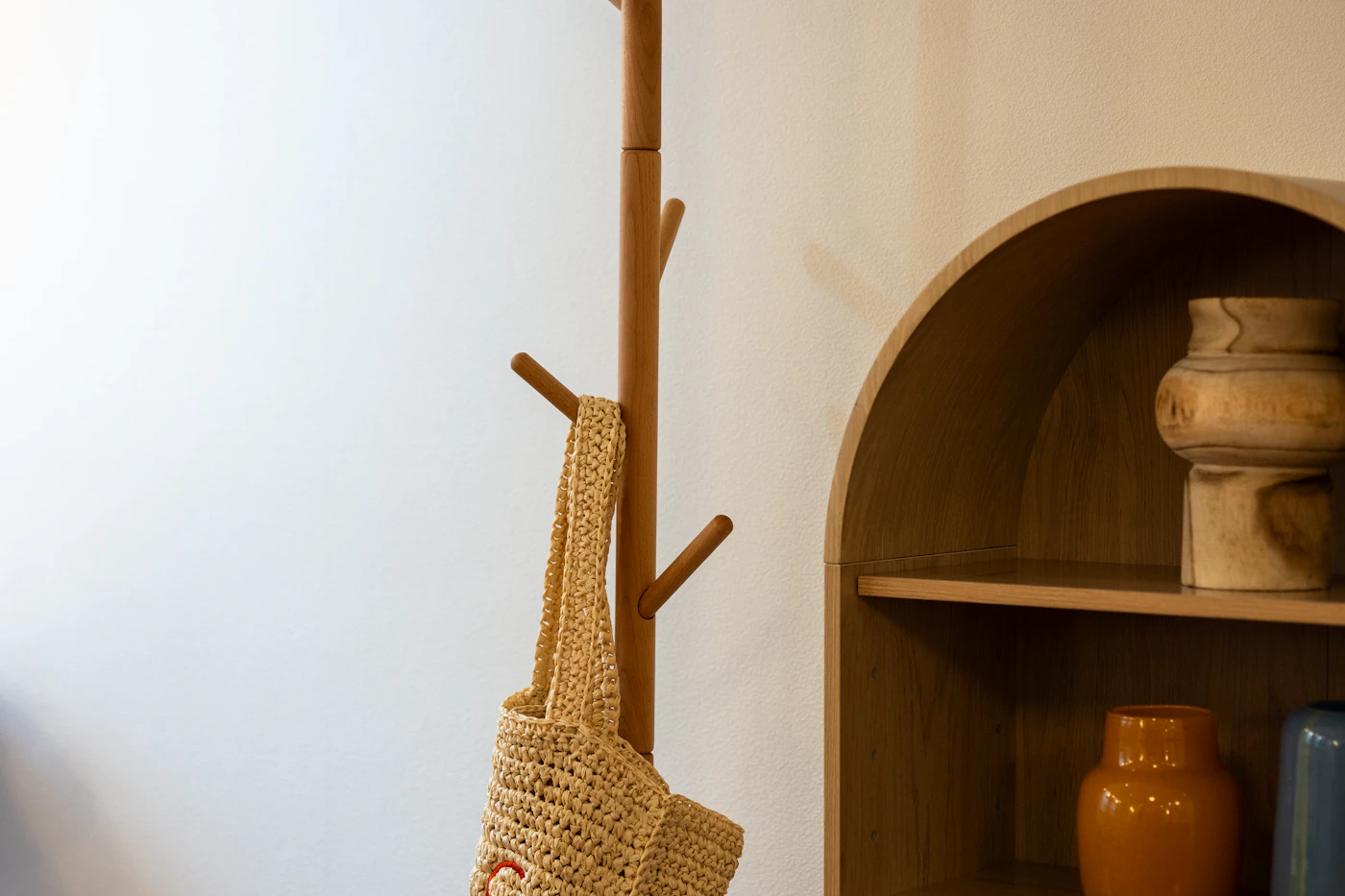
A beach tote often contains several different destinations: dishes for the kitchen, laundry for care, books for a shelf, and items that need to dry or be cleaned. Hanging the entire bag on a hook can postpone all of those decisions until the next outing, when something is missing or unpleasantly forgotten.
Make unpacking a short sequence. Remove food and drink containers first, then damp textiles, then anything needed elsewhere. Return only the items that genuinely belong in the outing kit. This keeps the bag ready without turning it into a sealed record of the previous day.
Keep a small checklist for shared equipment if it helps. A reusable bag might routinely hold a clean empty pouch, a folded tote, or another appropriate item, while perishable or care-sensitive contents should not remain by default. The checklist should reflect your actual outings, not a generic packing list that encourages unnecessary gear.
A fictional arrival that reveals the missing step
Consider a hypothetical weekend house shared by four adults. The entry has attractive hooks, a bench, and several woven baskets, yet every beach return creates clutter. Towels go into the baskets, tote bags stay full on the hooks, and the bench disappears under hats. The problem is not a lack of storage volume.
The group reviews the arrival sequence and moves towel handling to an appropriate designated area. One basket becomes clearly labeled clean outing supplies; another is removed because it has no useful role. A small surface near the kitchen receives bags briefly while they are unpacked. The bench is kept clear for shoes, and only the next day's empty totes remain on hooks.
The entry becomes simpler while the process becomes more complete. Each object has a next step rather than merely a hiding place. Nobody needs to maintain an elaborate display. The improvement comes from making the transition between outdoors and indoors understandable to everyone using the house.
Make guest instructions visible but modest
Visitors do not know your system. Explain the essential points when they arrive: where shoes can go, where damp items should be handled, and where to place shared equipment. Keep the explanation friendly and brief. A holiday house should not feel like a facility with a rule posted on every surface.
If written guidance is useful, group a few practical notes in one place. Use plain language and describe the action, such as where to leave used towels, rather than relying on decorative labels that could mean several things. Avoid assuming guests will infer the purpose of a container from its color or material.
Ask whether the arrangement works for them. Someone may need a lower hook, a clear place for a mobility aid, or a different way to manage footwear. Adapt where possible. A well-organized entryway should reduce effort for the people present, not require every visitor to imitate the host's routine exactly.
Choose coastal character through durable details
An entryway can feel coastal without fragile ornaments. A pale wall, a useful wood surface, a muted green basket, or one meaningful photograph can provide atmosphere. Keep decorative objects away from the active landing areas where bags and elbows are likely to collide with them.
Select materials for the conditions they will encounter. A delicate woven container may be suitable for clean dry hats but not for wet shoes. A surface used for bags should tolerate normal contact according to its care instructions. The same natural texture can be appropriate in one role and inconvenient in another.
Resist adding signs that simply name the theme. The room's function and palette can establish the feeling. A personal coastal photograph or an object with genuine significance is often more interesting than several generic beach slogans competing with the information guests actually need.
Build the weekly reset around categories
Set aside a short regular interval to return items to their proper places. Sort the entry's contents into things in active use, things needing care, things belonging elsewhere, and things no longer needed. These categories make the task more concrete than a general instruction to tidy up.
Clean the appropriate surfaces and containers according to their instructions. Check behind and beneath movable pieces where debris can accumulate, without disturbing fixed building elements or equipment. Inspect hooks and furniture for signs that maintenance may be needed, and address problems rather than loading them more heavily.
Do not let the reset become a major project. If it repeatedly takes too long, the system may be holding too much. Reduce the number of items allowed to stay at the entry and move less frequently used gear to suitable storage. The area should support the next arrival, not archive the entire season.
Adapt the system to an apartment doorway
The same principles can work without a separate entry hall. In a small apartment, the sequence may extend across two nearby locations: a compact landing place near the door and an appropriate unpacking or laundry destination farther inside. There is no requirement that every function fit within one square of floor.
Use vertical storage only where it is permitted, properly installed, and easy to reach. Keep the door and circulation route clear. A small hook arrangement may be more useful than a freestanding unit that consumes the only open space. The smallest homes benefit especially from defining what will not remain at the entrance.
If there is no room for a bench, identify another stable seat that can serve the purpose nearby. If there is no suitable place for damp items near the door, direct them immediately to the correct area. Organization can be a sequence of movements rather than a collection of furniture.
Separate shared equipment from personal belongings
A communal beach house can accumulate several nearly identical hats, bottles, and bags. Establish which items belong to the house and which belong to individual guests. A discreet label on shared equipment or a clearly designated storage area can prevent confusion without covering the room in signs. Personal belongings should have a place where they can be found and returned easily.
Before a guest leaves, invite a quick check of the entry and the appropriate laundry or drying areas. This is more useful than discovering an unfamiliar tote after everyone has gone. Keep found items together and contact the owner through the agreed channel, rather than immediately incorporating them into the house collection.
At the end of a stay, review shared supplies for condition and completeness. Repair, clean, or replace items only as needed. The entry should not become a museum of abandoned equipment whose ownership and suitability nobody can explain.
Prepare the entry for the next departure
The entryway also supports leaving. After care and cleaning are complete, return the necessary items to a clear ready state. Empty bags, paired shoes, and accessible keys are more useful than a perfectly styled surface. Keep tomorrow's needs distinct from items still waiting to be handled.
Do a quick check before a planned outing rather than assuming everything on a hook is ready. Shared gear may have been moved, a towel may still need attention, or a reusable bottle may be in the kitchen. The arrival routine reduces these problems, but a simple departure check remains worthwhile.
When the system works, the entry feels quieter because fewer decisions are deferred there. People can come home, deal with what needs attention, and move into the rest of the house. That ease is the most convincing beach-house detail: a space that understands how a day outdoors ends and helps the next one begin.