TROPICAL-TRIBE
The appeal of a reading corner is easy to understand: a comfortable seat, softened daylight, a book within reach, and a small sense of separation from the rest of the day. The difficulty is that many attractive corners fail at one of those ordinary tasks. The seat is awkward, the light falls across the page at the wrong angle, or the side table is so crowded that there is nowhere to set a cup.
Designing the corner around reading rather than styling changes the decisions. You begin with how you sit, when you read, what you bring with you, and how long you expect to stay. Tropical atmosphere can then enter through leafy color, natural texture, and a relaxed arrangement. It does not need to be supplied by a large plant occupying the only useful patch of light.
Choose the reading moment before the location
Describe the moment you want the corner to support. Morning reading before work may call for easy access and a place for coffee. An evening novel may require useful task lighting and a comfortable position for a longer session. A weekend newspaper spread across several sections needs more surface area than an e-reader.
Be realistic about duration. If you usually read for ten minutes, a compact chair may be enough. If you regularly settle in for an hour, sustained comfort becomes more important than a sculptural silhouette. The room should serve the reading habit you have or genuinely intend to build, not an imagined version of yourself that only exists in inspiration photographs.
Consider whether the corner is private or shared. A seat in the main living room will remain part of household life. That can be pleasant, but it means the design must accommodate conversation, television, and movement. A reading corner does not need complete isolation; it needs a clear understanding of its setting.
Find useful shade rather than simply the darkest spot
Shade in this context means relief from uncomfortable glare, not the absence of useful light. Observe potential locations at the hours you expect to read. A sunny window can be lovely in the morning and distracting later, while a corner deeper in the room may need supplemental light throughout the day.
Sit in the proposed position with an actual book or device. Notice reflections, the direction of light, and whether your body casts a shadow over the page. Turn the seat slightly before assuming the whole location is unsuitable. Small changes in orientation can alter the reading experience without requiring new furniture or window treatments.
Use existing curtains or blinds according to their design, and consider privacy along with glare. If new window coverings are needed, follow installation requirements and rental rules. Avoid makeshift hanging arrangements. The aim is a stable, repeatable setup that works when you are tired and want to sit down, not a temporary solution that must be rebuilt each time.
Test the chair with the way you actually sit
A chair can look inviting while encouraging a posture you do not enjoy. Try reading in it for a meaningful period before deciding it belongs in the corner. Check whether your feet rest comfortably, whether the seat depth suits you, and whether the armrests help or interfere with holding a book.
Use an existing chair for the first trial if possible. A dining chair with a suitable cushion may reveal that the location works before you invest in a dedicated seat. Conversely, a favorite lounge chair may prove too large for the route through the room. Separate the question of comfort from the question of fit, then look for an arrangement that satisfies both.
Do not promise yourself that decorative cushions will fix an unsuitable chair. They may help with a small adjustment, but too many loose additions create a seat that requires constant rearrangement. Choose comfort you can reproduce easily. If you need individualized ergonomic or medical advice, seek qualified guidance rather than treating a decorating article as a prescription.
Put the useful surface within an easy reach
A reading corner needs a landing place for the things that interrupt reading: glasses, a cup, a phone, a pencil, or the book itself. Place a stable surface where you can reach it without twisting awkwardly or standing. Its height and position matter more than whether it matches the chair exactly.
Test the surface with your real objects. A large mug and an open paperback occupy more room than a tiny staged vase. Leave the central area available for use and move decorative items elsewhere if necessary. A side table that functions only after its display is dismantled is not doing the job.
Consider spill consequences. Keep electronics, valuable books, and textiles arranged so that a routine accident is less likely to become a major problem. Use appropriate coasters or surface protection according to the furniture's care instructions. Practical protection allows the corner to remain relaxed because you are not constantly guarding its appearance.
Provide lighting for the hours daylight cannot cover
Even a bright corner needs a plan for cloudy days and evenings. Position a suitable reading light so that it supports the page without shining directly into your eyes or creating troublesome reflections. The exact arrangement depends on the fixture, seat, and reading material, so test it from the seated position.
Follow the lamp manufacturer's instructions for bulbs, placement, and operation. Keep cords out of walking routes and avoid improvised electrical work. A convenient outlet may influence where the corner can go, and that is a legitimate design constraint. Extending a room visually is not worth creating a practical hazard.
If the space is shared, observe how the light affects other people. A concentrated lamp may allow reading while someone else uses the room, but glare or spill can still be annoying. Adjust orientation and discuss preferences. A good shared corner supports one person's activity without making the surrounding room uncomfortable.
Bring in tropical character through a few deliberate details
A muted green cushion, a warm wood surface, or a botanical print can establish a leafy atmosphere without taking over the corner. Choose details that relate to the rest of the room. The reading area should feel like a considered part of the home rather than a separate themed installation.
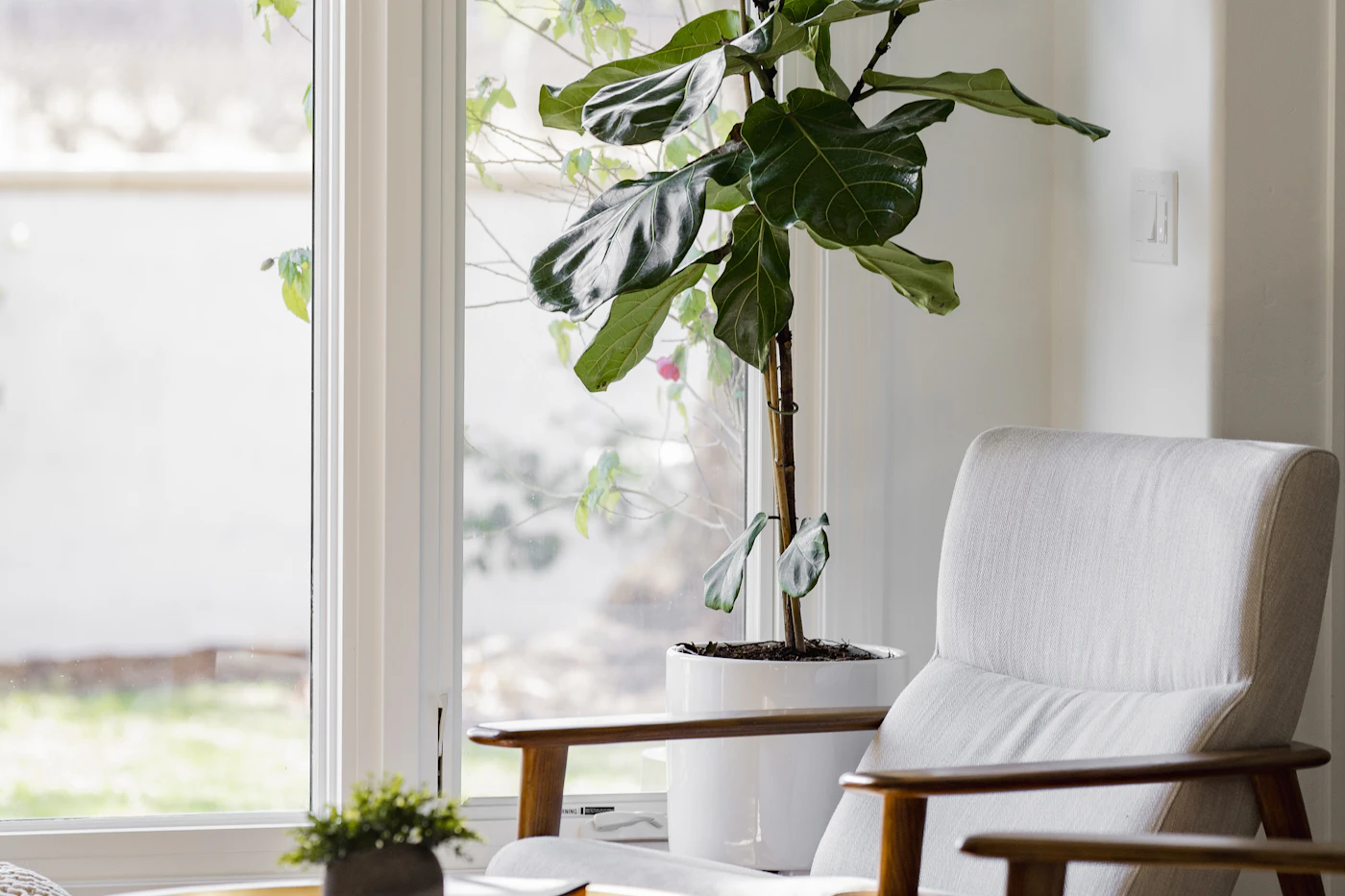
If you include a living plant, choose its location according to its needs and keep it out of the route to the chair. Do not place foliage where it brushes the reader's face or blocks the useful light. A plant can be visually nearby without occupying the side table or competing with the lamp.
Texture can provide much of the character. A plain woven cover beside a smooth ceramic cup creates variety without adding several colors. Keep the number of decorative decisions small enough that the book remains the center of the experience. The most successful atmosphere is often the one you stop noticing once you begin to read.
A hypothetical living-room corner in practice
Imagine a living room with a sofa facing a television and an unused area near a side window. The household wants a reading seat there but initially chooses a large armchair that narrows the route to the hallway. The chair is attractive, yet everyone brushes past it during normal movement.
The revised plan uses a smaller existing chair turned slightly toward the room, with a compact table on the window side and a suitable lamp placed where its cord can be managed safely. A botanical print hangs through an approved method on the adjacent wall. The plant stays closer to the window where its conditions are appropriate, leaving the table clear.
During the first week, the reader notices glare in late afternoon and adjusts the existing blind. A basket originally placed beside the chair proves unnecessary and is removed. The final corner contains fewer pieces than the first plan, but each contributes to reading. The route stays open, and the seat is used rather than admired from a distance.
Store the current reading, not the entire library
A small selection of active books keeps the corner focused. One current book, a notebook, and perhaps the next title may be enough. Stacks of unread books can look appealing, but they also occupy surfaces and collect miscellaneous papers. Let the main library remain elsewhere if space is limited.
Choose a storage method that matches how you read. A small shelf may suit books that need to stand upright, while a designated spot on the table may be enough for one paperback. Avoid unstable piles or storage that requires bending behind furniture. The easier the reset, the more likely the corner will remain ready.
Keep bookmarks, pencils, and glasses in a clear location if you use them regularly. These small practical details often matter more than a decorative purchase. A reading corner becomes inviting when you can begin without searching the house for the object you always misplace.
Protect the corner from becoming a holding area
An empty chair attracts laundry, bags, and parcels because it is a convenient surface. Decide where those items should go before the reading corner is complete. Otherwise, the chair will gradually lose its role and the room will gain an attractive storage pile instead of a place to read.
Use a simple reset: return the book to its place, remove the cup, and leave the seat available. The routine should take little effort. If several decorative objects must be restored after each use, the arrangement is probably too elaborate. Practical readiness is more valuable than maintaining a perfect cushion angle.
In a shared household, explain the corner's purpose without treating it as untouchable territory. Other people can use the seat while still respecting its basic setup. A small agreement about keeping the table and chair clear can be more effective than repeatedly moving belongings in silence.
Adapt the setup when your reading changes
Reading habits vary. You may move between print books, magazines, audiobooks, and digital devices. Reassess the corner when the activity changes. An e-reader may introduce reflections or charging needs, while a large illustrated book may need more support or a different surface.
Do not force every format into the same posture. Sometimes the dining table is better for a large book, and the corner can remain for a novel. A successful space does not have to handle every possible task. Giving it a clear role can preserve the ease that made you want it in the first place.
The same flexibility applies to seasons. A warm throw may be welcome during cooler evenings and unnecessary later. Keep it accessible without insisting that it remain draped over the chair year-round. The corner should respond to use rather than maintain an unchanging decorative arrangement.
Use sound and boundaries without overbuilding the corner
A reading corner in an active home will not always be quiet. Before adding screens or rearranging furniture, identify the actual interruption. Is it television sound, a conversation nearby, or the expectation that you are available for every small household question? Physical decoration cannot solve all of those issues. A simple agreement about a short reading period may help more than another object in the room.
If you use headphones or listen to an audiobook, keep awareness appropriate to your surroundings and responsibilities. Store the device where it does not become another loose item on the floor. The corner should accommodate your chosen format without creating a tangle of chargers and accessories around the seat.
You can also create a gentle visual boundary through orientation. Turning the chair slightly away from the busiest route may signal a different activity while preserving connection with the room. Avoid blocking circulation or enclosing the seat so tightly that entering it becomes awkward. A boundary should make the corner easier to use, not turn it into a miniature room with its own obstacles.
For households with limited space, time may be the most useful boundary. The same chair can support conversation earlier and reading later. A lamp switched on, a cleared table, and a book brought into place can mark that change. This flexible approach gives the corner a clear identity without reserving scarce floor area for only one person or one purpose.
Evaluate comfort after the novelty fades
After a few weeks, ask whether you naturally choose the corner. If you still read elsewhere, investigate the reason without blaming your habits. The seat may be less comfortable than expected, the light may be inconvenient, or the location may feel too exposed. These are design findings, not failures.
Change one element at a time so you can understand the effect. Reorient the chair, simplify the table, or move the reading time. If the location consistently does not work, let it become something else and identify a better spot. A designated corner is useful only if it supports an activity you enjoy.
The final measure is not how convincingly the space resembles a shaded veranda. It is whether you can sit down, see the page, reach what you need, and remain there comfortably. When those conditions are met, a few quiet botanical details can supply all the tropical atmosphere the corner requires.