TROPICAL-TRIBE
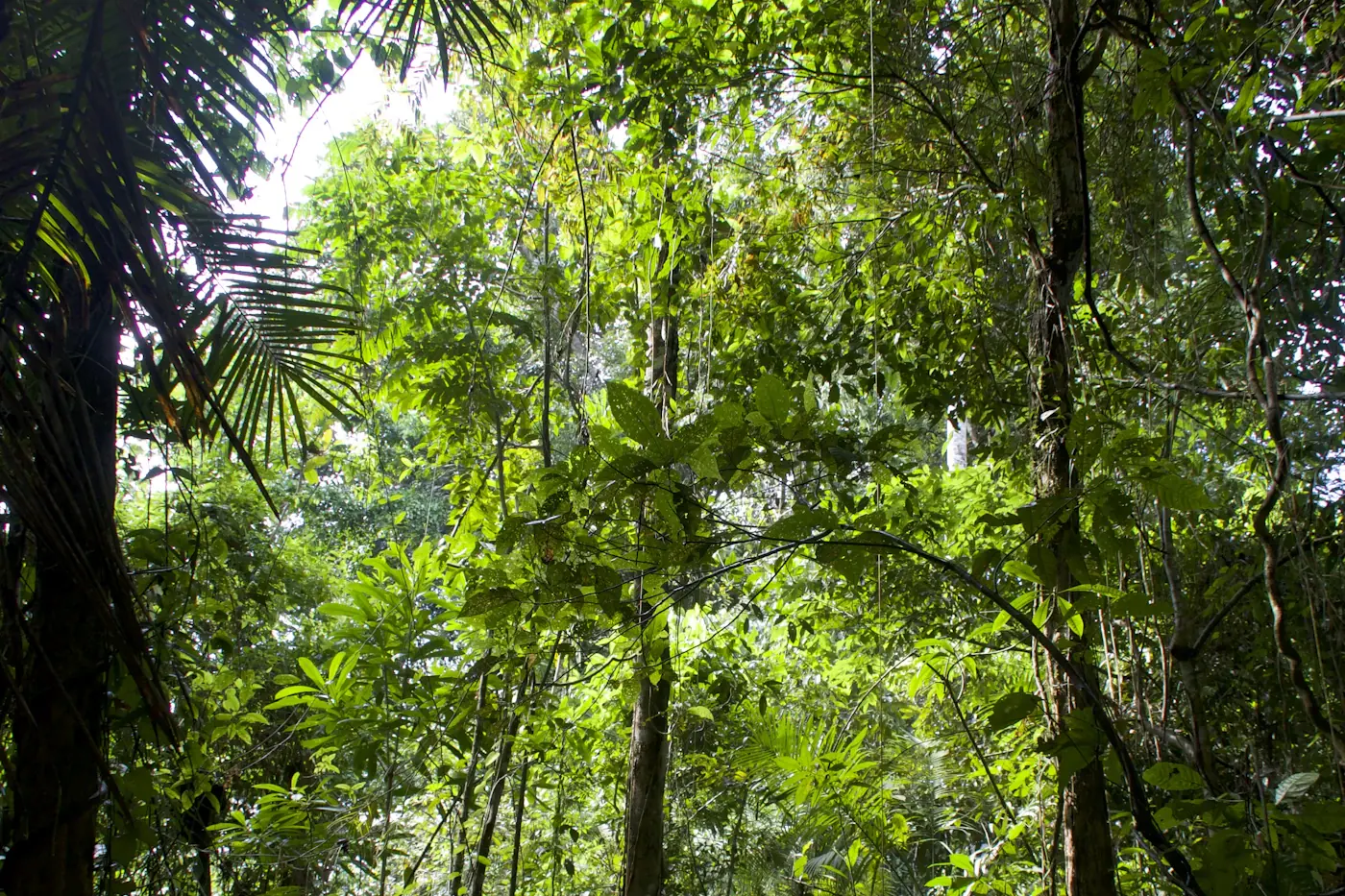
A tropical forest does not reveal itself all at once. From the entrance, the scene may seem like a continuous wall of green. After a little time, differences emerge: the scale of leaves, layers of shade, sounds from unseen places, and the way a path frames small openings. A first walk becomes more interesting when it leaves room for that gradual recognition.
The preparation should support attention rather than ambition. Choose an established route that matches your needs, consult current local information, and plan a pace that allows looking without compromising the return. The goal is not to cover as much ground as possible. It is to leave with a clearer sense of the place and enough energy to remember what you noticed.
Start with the official route description
Find the park, reserve, or land manager responsible for the trail. Read its current description, access notices, and visitor requirements. An online travel photograph may show a beautiful section while omitting the approach, stairs, closures, or conditions that determine whether the walk is suitable.
Look beyond distance. Surface, elevation changes, exposure, crossings, and available facilities can matter as much as length. A short route may still be demanding, while a longer maintained path may offer more predictable footing. If the description is unclear about something important to you, contact the managing organization before choosing.
Avoid assembling a route from unofficial shortcuts. Stay with established, permitted paths and current guidance. If an appealing trail is closed, select another experience rather than searching for a way around the restriction. The reason may involve safety, conservation, or maintenance that cannot be judged from the entrance.
Define a modest first visit
Choose a route that leaves spare capacity for pauses, changing conditions, and the return journey. A first encounter with an unfamiliar environment is not the best occasion to discover the outer edge of your endurance. A comfortable introduction can make a later, more demanding outing easier to assess.
Decide what you hope to notice. Perhaps you are interested in leaf shapes, the structure of the forest, or the way a guide explains relationships between plants and place. A specific interest gives the walk purpose without requiring a distant summit or a dramatic waterfall as proof of completion.
Discuss the plan with companions in concrete terms. Describe the expected terrain and pace, the available facilities, and how the group will decide to turn back. A phrase such as easy nature walk means different things to different people. Shared detail prevents avoidable disappointment at the trailhead.
Consider a guide for interpretation
A local guide can make a modest route feel rich by helping you notice what is already around you. Ask about the guide's relevant experience, the group size, the language used, and the balance between walking and explanation. A nature-focused program should describe more than a destination and a departure time.
Clarify whether the activity is suitable for your experience and access needs. Explain any concerns about surfaces, stairs, hearing instructions, or maintaining the advertised pace. A thoughtful operator can describe limitations and may suggest another program. That honesty is more helpful than a vague assurance that everyone manages.
Choose a guide who respects the habitat. Be cautious about outings promoted through handling wildlife, collecting plants, or taking visitors off permitted routes. Interpretation does not require disturbing the subject. Questions, observation, and appropriate educational materials can provide depth while leaving the forest intact.
Plan the journey to the trailhead
The walk begins before the first tree. Confirm the correct entrance, transport arrangements, parking, admission or reservation requirements, and the distance between arrival and the actual trail. Some destinations have several access points with different facilities. A general map pin may not identify the one your plan requires.
Establish the return arrangement in advance. If relying on a shuttle or public transport, check the current schedule and leave enough room for the walk back to the stop. Do not assume that a ride can be requested from an isolated trailhead without reliable reception or service availability.
Save essential route and contact information appropriately, including an offline copy when useful. Share the plan with someone who needs to know it, following local trip-planning guidance. Practical preparation reduces the temptation to rush later when a transport deadline begins competing with the pace of the walk.
Let local advice shape the packing
Use the land manager's or guide's current packing instructions as the starting point. Bring the water, food, clothing, footwear, weather protection, and personal essentials appropriate to the specific route and conditions. A generic list cannot know every person's needs or every forest's access requirements.
Keep the load manageable, but do not remove essential items simply to make the bag lighter. Separate frequently used things from items you may not need during the walk. A small organizational decision can prevent repeated unpacking at narrow stopping places and help you remain attentive to the group.
Protect important belongings from expected moisture according to their requirements. Do not assume that a phone, paper map, or medication can tolerate the same storage conditions. If a personal item has specific temperature or handling needs, arrange those properly before choosing an outing that may complicate them.
Check conditions close to departure
Read current weather information and the site's notices before traveling. Tropical scenery should not create an assumption of stable conditions. Rain, heat, damaged paths, and other local factors can change what is appropriate. Follow official closures and instructions rather than trying to infer suitability from a broad forecast icon.
The National Park Service's hiking guidance encourages visitors to ask about current conditions, understand the route, and plan the return. For a tropical forest outside the United States, use the corresponding local authority. General principles are useful, but the specific decision belongs to the actual place and day.
Agree that changing the plan is acceptable. If conditions make the walk unsuitable, a visitor center, guided indoor program, or another open established route may preserve the learning purpose. Research one concrete alternative so that flexibility does not become a last-minute search for something available.
Give the entrance a few unhurried minutes
At the trailhead, read notices and confirm that the route matches your plan. Locate facilities, review the map, and ask staff about any changes. Check that everyone understands the intended walk and return. This is the easiest place to resolve uncertainty before the group becomes committed to the path.
If joining a guide, listen carefully to the briefing. Ask about any instruction you do not understand, including group spacing, stopping, and communication. Avoid adjusting cameras or holding side conversations during information that affects the whole outing. A few minutes of shared attention can make the rest of the walk smoother.
Begin slowly enough to notice how the route feels. The first section gives useful information about surfaces, the group's pace, and personal comfort. Do not interpret an early need to adjust as a failure. It is the plan responding to reality, which is exactly what good preparation should allow.
Look in layers
From a suitable stopping point, notice the forest at several scales. There may be broad patterns above, smaller vegetation around the path, and details on the ground visible without stepping off the trail. You do not need to identify everything to recognize that the scene contains different structures and relationships.
Choose one layer at a time. Looking at the overall canopy, then at nearby leaves, then at a permitted view of the forest floor can make the scene easier to understand. Keep awareness of footing and other visitors; stop in an appropriate place before directing attention upward or through a camera.
Ask a guide how they choose what to notice. The answer may reveal an observation habit you can use elsewhere, such as comparing shapes or looking for evidence of change. Learning a method of attention often lasts longer than memorizing a long list of names during one walk.
Listen without trying to produce a response
A quiet pause can reveal sounds hidden beneath conversation. Notice their direction, repetition, and distance as best you can. You do not need to know the source immediately. A simple description in a notebook may preserve the experience more faithfully than an uncertain identification presented as fact.
Do not play recorded calls or make noises to attract wildlife. Follow local rules about sound and observation. The purpose is to encounter the forest's existing activity, not to direct it for entertainment or a recording. Let the guide explain what can reasonably be inferred from what you hear.
Respect other visitors' experience as well. Keep conversations at a considerate volume and use headphones if an audio resource is appropriate to the setting. Quiet is not an empty space waiting to be filled; it is part of what many people came to experience.
Keep curiosity on the path
An unusual leaf, bright fruit, or moving shape can pull attention away from the established route. Observe from permitted positions and ask questions rather than approaching, touching, tasting, or collecting. Unfamiliar plants and animals should not become experiments in identification.
Avoid moving vegetation for photographs or arranging natural objects into a more attractive scene. The forest is not a set built for visitors. A partially obscured view can still be a worthwhile memory, and the decision to leave something unseen may be the most appropriate response.
If you encounter wildlife, follow the guide's and land manager's instructions about distance and behavior. Do not feed, surround, or follow an animal. An encounter that remains brief and undirected can be more meaningful than a close approach that changes the animal's day.
Manage the pace as a shared agreement
Groups often contain different walking speeds and attention spans. Decide how to remain together and where stops will occur, following local guidance. A person who pauses to look should not feel compelled to hurry alone to catch up, and a faster walker should not quietly redefine the route for everyone.
Use breaks to check comfort and the remaining plan. Keep the return in view rather than treating the outward destination as the only milestone. If the group needs to shorten the outing, make the decision while there are straightforward options, not after the original schedule has become unrealistic.
Avoid turning encouragement into pressure. There is a difference between offering practical support and persuading someone to continue beyond their comfort or capability. A successful group walk is one in which the plan suits the people present, not one in which every advertised landmark is reached.
Record a few details after the walk
Once back in a comfortable place, write down three observations and one question. The observations might concern a leaf pattern, a change in light, and a sound. Keep names uncertain if they were not confirmed. A short accurate record is more valuable than an elaborate account reconstructed from assumptions.
Review photographs for what they actually show. Some may communicate the layered setting better than the close-up you expected to prefer. Add a caption that explains what interested you without inventing ecological meaning. If a guide supplied an explanation, distinguish that learning from your own direct observation.
Choose one question for later reading through the reserve, a museum, or another reliable educational organization. This small continuation helps the visit remain more than a collection of images. It also gives a future walk a natural starting point without requiring a more ambitious route.
Build a forest day rather than a trail checklist
Leave the rest of the day relatively open. A simple meal, time to dry or clean belongings appropriately, and a quiet review of notes can make the whole experience feel coherent. A rushed transfer to another major activity may erase the attentive pace you worked to create.
For a hypothetical first visit, a short guided walk followed by a visitor-center stop and an unhurried lunch may offer more depth than several trails completed quickly. The exact arrangement depends on the destination, but the principle is consistent: interpretation and reflection add value without adding distance.
The forest does not owe visitors a dramatic animal sighting or a clear view at every turn. Its interest often lies in connections that become visible slowly. Prepare well enough to be comfortable, choose a suitable route, and let a modest walk be complete on its own terms.
Planning resource
Review the National Park Service's Hike Smart guidance, then consult the current instructions issued by the authority managing your chosen forest. Route closures, weather advice, and local staff guidance take priority over general travel suggestions.