TROPICAL-TRIBE
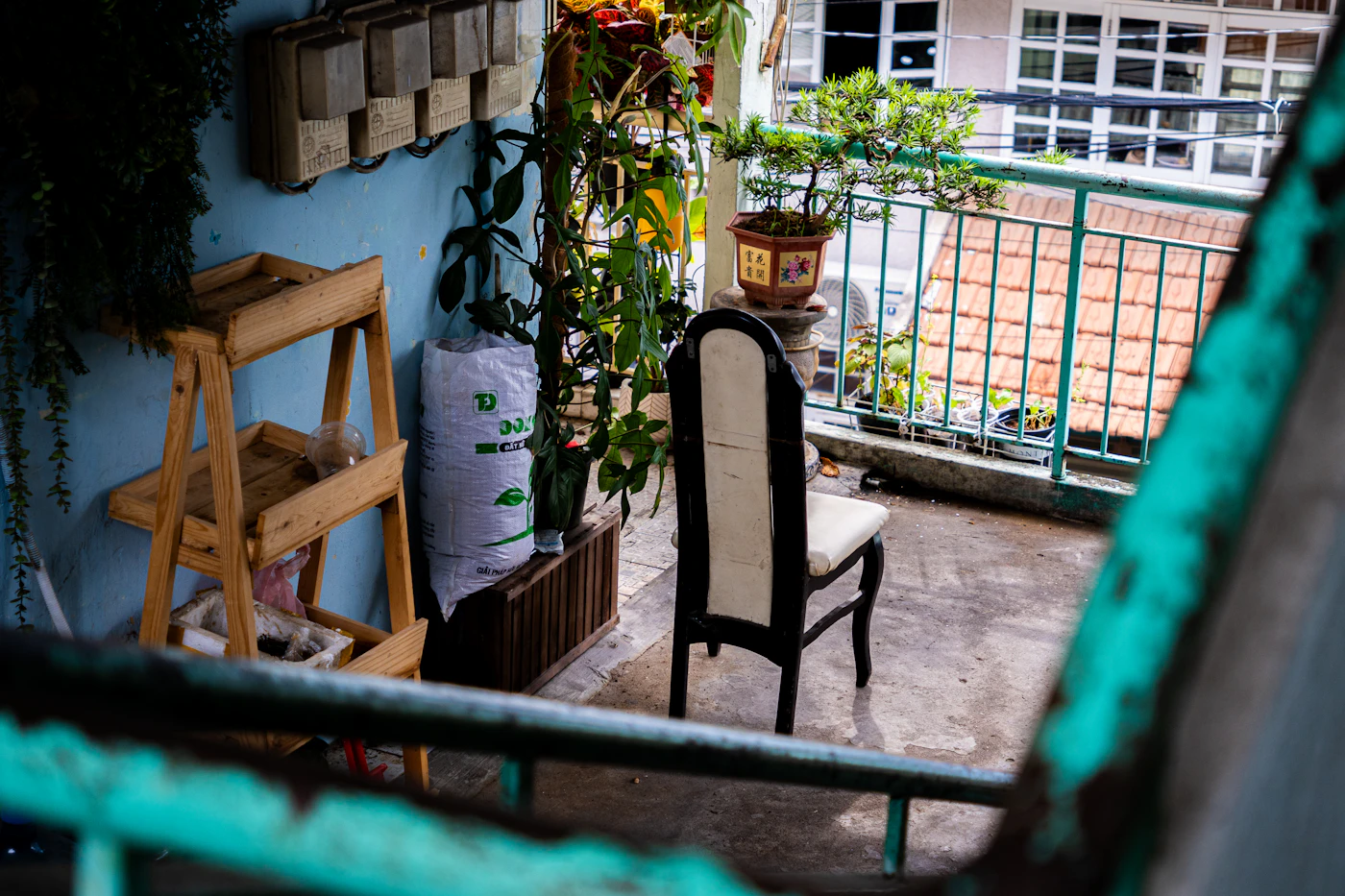
A small balcony is easy to overplan. Photographs encourage a full dining area, a miniature garden, a lounging corner, and decorative lighting, all within a space barely larger than a hallway. The resulting arrangement may look appealing from the doorway yet leave no room to pull out a chair. A more useful balcony begins with one ordinary activity and enough clear space to perform it comfortably.
Perhaps you want to drink coffee outside before work, read for twenty minutes after dinner, or sit with another person on a quiet evening. These are different briefs. A coffee perch can be compact; a reading seat needs more sustained comfort; two people require a layout that makes conversation possible. Decide which experience matters most before choosing furniture or plants.
Establish what the balcony can safely accommodate
Review the lease, building rules, and any relevant guidance from property management before making changes. Restrictions may concern attachments, screens, furniture, planters, grills, lighting, or anything visible from outside. Do not assume that a product marketed for balconies is permitted in your building or appropriate for your particular structure.
For structural capacity, railing attachments, or installation questions, obtain information from the building owner or a qualified professional. A design article cannot determine the load capacity of an unseen balcony. Large wet planters, stored materials, and heavy furniture deserve particular attention. Keep drainage openings and required access clear, and do not create a climbing opportunity near a railing.
This early check is not paperwork separate from the design. It defines the available design. If attachments are prohibited, the project should not depend on a wall-mounted table. If loose items must be brought inside during severe weather, indoor storage belongs in the plan from the beginning rather than becoming a last-minute problem.
Measure movement as well as floor area
Measure the balcony, doorway, and door swing, then draw a simple plan. Include obstructions such as air-conditioning equipment, drains, columns, or built-in ledges. A rectangle drawn without these details creates false space. Record the dimensions in one place so you do not rely on memory while comparing furniture.
Next, test the activities you want to perform. Open the door fully, step outside carrying a cup, turn around, and imagine sitting down. Mark the area that must remain clear. A chair's footprint is not only the size of its legs; it includes the space needed to approach, sit, stand, and move it.
Use removable floor markers only where permitted and where they will not damage the surface. Cardboard cutouts can help indoors when you are comparing dimensions, but avoid leaving loose materials outside. The point is to test scale before purchasing, not to create a temporary obstacle or litter source.
Observe the balcony at the times you will use it
An outdoor space changes throughout the day. A balcony pleasant in the morning may be exposed to intense afternoon sun, while one sheltered at midday may become breezy in the evening. Spend time there during your intended use hours before deciding what comfort requires.
Notice privacy, street noise, neighboring windows, and the direction of weather exposure. These observations help you distinguish problems that a layout can address from conditions you need to accept. Turning a chair may improve the view; a small decorative screen will not necessarily solve noise or provide safe wind protection.
Be cautious about adding shade structures or privacy panels without approval and appropriate installation. Wind changes the demands on objects outdoors. Follow building requirements and manufacturer instructions, and do not improvise attachments to railings. If shade cannot be safely provided, shifting the time you use the balcony may be the simplest workable design decision.
Choose one primary furniture arrangement
For a solo reading balcony, one comfortable chair and a reachable surface may be enough. For two-person coffee, a pair of appropriately sized seats may take priority over a large table. A dining arrangement requires a different commitment to clearances and storage. Do not purchase pieces for all three possibilities unless the space can genuinely support them.
Folding furniture can be useful, but folding is not the same as effortless. Consider where the pieces will be stored, whether they are easy to handle, and how often you are willing to set them up. A chair that remains folded because retrieving it is inconvenient does not provide much usable seating.
Select furniture intended for the exposure it will receive, and read care and storage instructions. Indoor furniture placed outdoors for appearance alone may deteriorate or become unsuitable. Stability, comfortable use, and manageable maintenance deserve more attention than whether the piece looks coastal in a photograph.
Give the smallest surface a clear role
A compact side table can prevent a balcony from feeling improvised. It provides a stable place for a drink, book, or glasses and reduces the temptation to use a railing as a shelf. The surface does not need to be large, but it should be accessible from the seat and appropriate for outdoor use.
Avoid stacking several functions on one precarious object. A planter should not become a drinks table, and a decorative crate should not become seating unless it is designed and rated for that purpose. Small spaces benefit from multipurpose items only when each use is supported by the object's construction.
Try the arrangement with the items you actually bring outside. A large mug, reading glasses, and an open book require more space than a single staged cup. If the table cannot hold them, decide whether the book will stay in your lap or whether another layout is needed. The test should resemble your real routine.
Add greenery where it can be maintained
Plants can soften a balcony, but begin with exposure, species needs, container stability, and watering logistics. A plant selected for its leaf shape alone may be poorly suited to the sun, wind, or seasonal temperatures. Consult local extension guidance and a knowledgeable nursery for the actual conditions you have observed.
Think through water before adding several pots. Where will you fill a watering container? How will excess water be managed without creating problems below or damaging surfaces? Can you reach each plant without leaning over a railing or moving heavy furniture? These questions determine whether the collection will remain practical.
A single well-placed container may be more effective than a row of small pots that crowds the floor. Leave room for growth and for maintenance. If the balcony cannot support the plant display you imagined, botanical colors or a permitted textile may provide the atmosphere with fewer ongoing demands.
A hypothetical narrow-balcony redesign
Consider a fictional balcony measuring approximately four feet by nine feet, with an inward-facing view toward neighboring buildings and a door near one end. These dimensions are only an example, not a recommended standard. The resident wants to read outside alone and occasionally share coffee with a friend.
The first sketch contains two large lounge chairs, a central table, and planters along the railing. Testing the footprints reveals that the chairs block movement and leave nowhere to stand while opening the door. The resident revises the plan around one compact reading chair at the far end, a small stable table beside it, and a second lightweight seat stored indoors when not needed.
One approved planter sits where it does not obstruct drainage or circulation. Cushions return indoors after use according to their care needs. The balcony loses the appearance of an outdoor living-room set but gains a routine that is easy to repeat. Its success is measured by actual evenings spent there, not the number of features included.
Make privacy a matter of orientation first
Before installing anything, experiment with the direction of seating. A slight turn can move a neighboring window out of the direct line of sight while preserving openness. Positioning a chair to face along the balcony rather than outward may create a more comfortable experience without changing the structure.
Use objects you already own to test visual height indoors before buying a screen. A panel that appears modest in a product photograph may dominate a narrow balcony. If a screen is permitted, confirm its suitability, anchoring requirements, and behavior in wind with the manufacturer and building management.
Respect the fact that privacy works both ways. Avoid directing bright lights into neighboring windows or arranging seating so that it encourages prolonged observation of someone else's home. A retreat feels more comfortable when it is considerate of the people sharing the building and surrounding space.
Keep outdoor textiles manageable
Soft furnishings can make a compact seat more pleasant, but too many cushions create storage work. Choose the minimum that improves actual comfort. Read care labels and understand whether an item is intended for covered outdoor use, fully exposed use, or indoor use only. Those distinctions matter more than a tropical print.
Plan a dry storage location before adding textiles. Bringing cushions inside should not require clearing a closet every evening. A designated shelf or container, used according to material care needs, makes the routine simpler. Do not store damp items in a closed space and assume the problem has been solved.
An outdoor rug is optional. It may introduce color and define an area, but it can also complicate cleaning, drainage, and drying. Check building rules and surface requirements, then consider whether a bare floor is easier to maintain. A balcony does not need every layer found in an indoor room to feel complete.
Design the five-minute reset
The best balcony routine includes a quick way to finish using it. Decide where the cup goes, where the book returns, which items come inside, and what needs checking before the door closes. A short reset prevents the space from becoming a holding area for forgotten mugs and weathered cushions.
Keep outdoor cleaning supplies appropriate to the materials and building rules. Avoid sweeping debris or sending dirty water over the edge. Follow local and property guidance for cleaning, drainage, and waste disposal. Consider neighbors below as part of the design brief, particularly when watering or moving pots.
If the reset consistently takes longer than you are willing to spend, reduce the number of items outside. Convenience is not an afterthought. A retreat that demands a complicated setup and cleanup will often be used less than a simpler arrangement with one comfortable seat.
Allow the weather to change the plan
Have a clear procedure for securing or bringing in items when weather requires it, based on building guidance and product instructions. Do not wait until strong wind or a storm is already making the balcony difficult to access. Storage capacity is part of preparedness, especially in a small apartment.
Some days will not be balcony days. Heat, cold, rain, poor air quality, or nearby maintenance may make the indoor chair the better choice. Avoid treating the space as a project that must justify itself through constant use. A seasonal outdoor corner can still be valuable even when it spends part of the year quietly waiting.
Use those changes to refine the setup. If one chair is always moved to avoid glare, its usual location may be wrong. If a plant repeatedly obstructs the door, it needs a different position or home. Small adjustments based on repeated use are more informative than a complete redesign inspired by another photograph.
Think about evening light from the seated position
If you plan to use the balcony after dark, test the existing lighting before adding more. Sit where the chair will be and notice whether you can see the doorway and any changes in floor level. A decorative glow is different from useful visibility. Keep access clear and use only equipment suited to the location and installed according to its instructions.
Avoid open flames as a default styling device, and follow all building restrictions. Battery-powered options still need appropriate handling, weather suitability, and storage. The aim is enough light for the intended activity without glare in your eyes or a bright spill into neighboring rooms. Often a modest, carefully positioned light is more comfortable than a string of lights outlining every edge.
Finish with a room for one real moment
Stand in the doorway and ask whether the balcony invites the activity you chose at the start. Can you reach the chair easily? Is there a secure place for what you carry? Can you leave without rearranging everything? These questions reveal more than whether every color coordinates.
Keep one area visually quiet. A glimpse of bare floor, open wall, or unobstructed view gives the arrangement breathing room. The absence of another object can be the detail that makes a small balcony feel generous. Resist filling every remaining gap simply because it is visible.
When the layout works, use it before improving it further. Take your coffee outside, read a chapter, or sit for a few minutes without adding anything. The most persuasive tropical retreat is a place that makes an ordinary pause easy, even when its entire furnishing plan consists of a chair, a table, and a little carefully chosen greenery.