TROPICAL-TRIBE
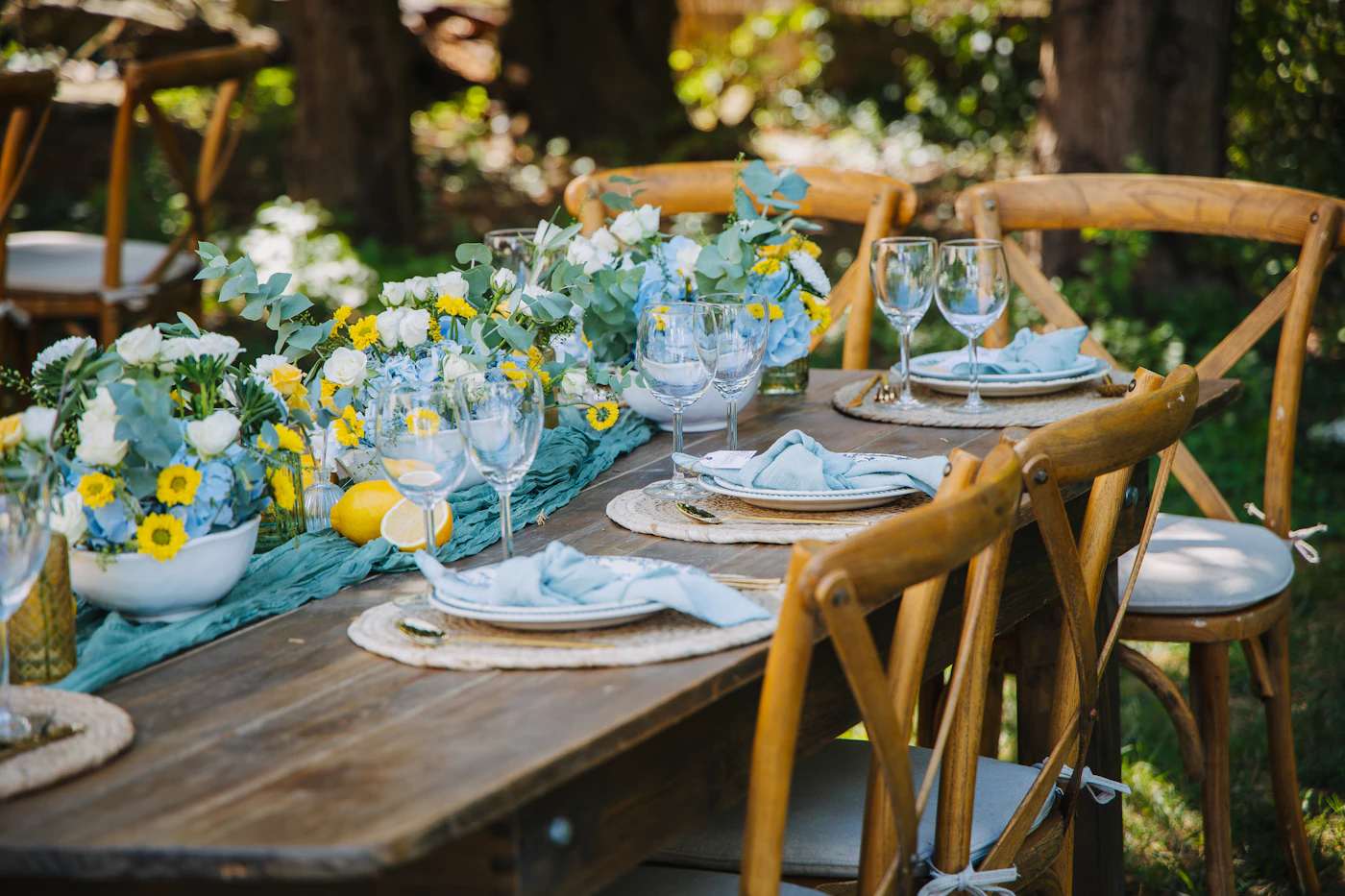
A tropical-inspired table can begin with ordinary dishes. White plates, mismatched glasses, a green cloth, and a bowl already used for fruit may be enough to suggest a relaxed warm-weather meal. The atmosphere comes from relationships among color, material, food, and space, not from purchasing a complete collection of themed objects.
The most welcoming table also works while people are eating. Guests should be able to see one another, reach their glasses, and understand how food will be served. A centerpiece that fills every open area may look generous before dinner and become an obstacle five minutes later. Start with the meal's practical needs, then add decoration only where it leaves those needs intact.
Inventory the pieces that already serve you
Gather the dinnerware, glasses, cutlery, serving bowls, linens, and simple decorative objects you could use. Do not begin by judging whether they match. First determine what is available and what each piece does well. A plain mixing bowl may be an excellent serving vessel, while an attractive shallow dish may be unsuitable for the food you plan to offer.
Check condition and suitability for contact with food. Decorative objects should not become serving pieces unless they are intended for that use. Follow the maker's guidance for heat, cleaning, and handling. The tropical feeling should never depend on improvising with a vessel whose finish or material is unknown.
Write down genuine gaps separately. Perhaps you need to borrow two drinking glasses or a serving spoon. Those are focused needs. They do not automatically justify buying a matching dinner set, especially if the existing pieces can form a coherent arrangement through repetition and careful placement.
Choose a mood through color rather than symbols
Select a simple color direction from what you own. Pale dishes with green napkins can suggest foliage; warm wood with a clay-colored cloth can feel sun-warmed; blue glass beside neutral ceramics can provide a coastal note. You do not need all these elements at once. One clear relationship is usually enough.
Look at the food as part of the palette. A colorful meal may need a quiet table so the dishes remain visually appealing. If the menu is mostly neutral in color, a textile or bowl can supply the accent. This approach avoids decorating the table as if the meal itself will not appear.
Literal motifs are optional. A palm-print napkin may be enjoyable if you already own it, but it should not trigger a chain of matching purchases. A table can feel tropical through lightness, greenery-inspired color, and relaxed arrangement without a single pineapple-shaped object or beach-themed sign.
Plan the table around the serving method
Decide whether food will be plated in the kitchen, served family-style, or placed on a separate surface. Each method requires a different amount of table space. Family-style service needs room for bowls and safe passing; plated service can leave more space for a modest centerpiece; a buffet needs a clear route and a place for used serving utensils.
Set out the actual serving vessels before adding decoration. Place empty bowls where they will go and test whether guests can reach them without leaning awkwardly across one another. Include water, condiments, and any utensils that are easy to forget. The table's available space becomes much clearer when these practical items are present.
If the table is small, move some functions elsewhere. Drinks or extra napkins can sit on a nearby suitable surface. Do not make guests hold plates in their laps because the table is occupied by decoration. A restrained setting often feels more generous because it provides space for people rather than objects.
Make mixed dinnerware look deliberate
Matching is one way to create coherence, but repetition of another element can work just as well. Use the same napkin fold, similar spacing, or a repeated glass shape to connect different plates. Alternatively, alternate two sets in a simple pattern if the numbers allow. The arrangement should look considered without becoming a puzzle.
Keep differences comfortable for guests. Avoid giving one person a very small plate while another receives a much larger one unless the meal itself calls for different vessels. Function should remain comparable even when appearance varies. Borrowing a few pieces may be more sensible than forcing a mismatch that complicates eating.
Do not apologize for everyday dishes. A welcoming table is not a demonstration of ownership. If the pieces are clean, suitable, and arranged with care, they can support an excellent meal. The host's ease often contributes more to the atmosphere than a perfectly coordinated set that required an expensive last-minute purchase.
Use cloth where it improves the setting
A tablecloth can unify mixed dishes or soften a surface, but it is not required. A runner, placemats, or folded napkins may be enough. Consider how the fabric affects stability, cleaning, and the space available for serving. A bulky fold should not compete with a plate or create an awkward place for a glass.
Choose textiles you can maintain and that are suitable for the meal. Follow care instructions and avoid introducing a fragile or precious cloth if you will spend the evening worrying about every spill. A relaxed setting depends partly on the host being willing to let people use it normally.
If linens are mixed, connect them through a broad color family or a repeated fold. You can also use plain paper napkins when that is the practical choice. The goal is thoughtful hospitality, not proving that every element meets a particular lifestyle ideal. Make decisions that fit the gathering and your resources.
Build a centerpiece that leaves people visible
A centerpiece should fit the table's remaining space after the useful objects are placed. Keep sightlines in mind by sitting at the table and looking across it. Tall arrangements may be beautiful on a sideboard but disruptive between people trying to talk. Low, simple forms often work better for a shared meal.
A bowl of fruit can provide color if the fruit will actually be used. A small vase of appropriately chosen flowers or foliage can also work, but confirm plant identity and household suitability, and keep decorative material away from food. Do not collect plants from public or protected places for table decoration.
Avoid using scent to carry the theme. Strong fragrance can compete with food and may be unwelcome to guests. Open flames also introduce practical concerns; follow all safety guidance and household rules if using candles. Decoration should support the meal without creating another thing everyone must monitor throughout the evening.
A hypothetical dinner for six
Imagine a household hosting six people at a rectangular table. They own four white plates, two cream plates, mixed clear glasses, green napkins, and several wood and ceramic serving pieces. The menu will be served family-style, so the table must hold three main dishes and a water pitcher.
The hosts place the serving dishes first and discover that a large planned centerpiece leaves too little passing space. They replace it with a small bowl on a nearby shelf and keep only a low decorative piece at one end where it does not interfere. The two cream plates sit opposite each other, and each setting receives a green napkin folded in the same simple way.
A separate surface holds extra water, clean serving utensils, and dessert plates. The table feels coherent because color and spacing repeat, not because every object matches. During dinner, nothing needs to be removed urgently to make room for food. The preparation has created ease rather than a display that must be dismantled.
Leave room for the way guests actually behave
People set down phones, glasses, medicine containers, small bags, and other personal items. A table plan that assumes only the official place setting will appear is too rigid. Leave a little flexibility and offer a nearby place for belongings where appropriate. Do not make guests feel that their presence disrupts the arrangement.
Consider different needs when assigning seats and placing shared items. Some guests may prefer a particular type of chair, need more room to move, or find reaching across a table difficult. Ask about practical requirements in advance when useful and respond without turning them into a public announcement during the meal.
Conversation also needs space. A large central object can divide a group visually, while tightly packed settings can make every movement feel cautious. Reducing the number of decorative pieces may improve both. A table is successful when people settle into it naturally and stop noticing its arrangement.
Prepare a practical staging area
Before guests arrive, identify where serving dishes will wait, where empty dishes will go, and what can be cleared without interrupting conversation. A small staging area in the kitchen or on a sideboard can keep the table from becoming a temporary storage surface between courses.
Set aside the utensils needed for each dish. This avoids searching drawers while food is ready and guests are seated. Labeling the plan privately with a small note can help if several people are cooking or serving. The organization should remain behind the scenes, allowing the visible table to stay simple.
Do not put every possible item on the table in advance. Dessert utensils, extra glasses, and secondary condiments can wait nearby until needed. Reducing early clutter makes the setting easier to understand and leaves more room for the main meal. The table can change over the course of the evening.
Keep cleanup compatible with the gathering
Choose pieces partly according to how they will be cleaned afterward. A collection of delicate hand-wash-only objects may be manageable for a small quiet dinner and exhausting after a larger gathering. Read care instructions and be realistic about the time and space available at the end of the evening.
Prepare a safe place for clearing dishes so they are not stacked precariously. Keep decorative items separate from food-service cleanup if their materials require different handling. A thoughtful table plan includes what happens after use, not just how everything looks when guests first arrive.
If friends offer help, give a specific manageable task rather than directing everyone into the kitchen at once. Gathering glasses or folding reusable napkins may be useful, while the host handles items needing special care. A calm cleanup can extend the relaxed atmosphere rather than abruptly ending it.
Refresh the same pieces for another occasion
The same plates and glasses can feel different when the supporting details change. A green napkin with a warm wood bowl creates one mood; a pale cloth and blue glass create another. You can alter placement, textile color, or the serving arrangement without replacing the core collection.
Keep a photograph for your own reference if a setup works well. Note what was useful and what remained untouched. Perhaps the water pitcher was too far away, the extra small plates were unnecessary, or the simple centerpiece left exactly the right amount of space. These observations make the next gathering easier to plan.
Resist turning a successful meal into a requirement to improve the decor next time. Familiar dishes can become part of the pleasure of gathering. Guests may remember a particular bowl or cloth because it returns with good conversation, not because every visit presents a new visual concept.
Make a small table feel generous through sequence
When space is limited, serve the meal in stages rather than compressing every course onto the table at once. Clear the main serving dishes before bringing out dessert, and keep coffee or tea preparation on a separate suitable surface. The change can feel natural if the necessary pieces are ready nearby instead of stored in hard-to-reach cabinets.
Explain the arrangement simply when guests arrive. Letting people know where extra water or napkins are available makes the setting easier to navigate without requiring repeated requests. Do not overlabel every object or turn the gathering into a set of instructions. A brief welcome and a visible practical layout are usually enough.
This sequence also lets familiar objects take different roles. A cleared serving tray might later hold cups, provided it is suitable and properly cleaned for that use. The table gains flexibility from timing rather than additional furniture or a larger collection of accessories.
Let hospitality remain the central design element
Before considering the table finished, sit at each place briefly. Check the chair, reach, view, and available space. This small exercise can reveal an awkward setting that is invisible from the standing host's perspective. Adjust the arrangement for the people who will use it rather than for the photograph you could take.
Then stop decorating. Give yourself time to finish the food, change clothes if needed, and welcome guests without rushing. A host who is still rearranging leaves while everyone waits may have perfected the wrong part of the evening. The table should be ready enough to support your attention elsewhere.
Tropical inspiration works best here as an invitation to ease: a little color, familiar materials, room for shared food, and no pressure to perform a theme. When the dishes already in your cupboard can help create that experience, the most valuable new element may be nothing more than a clearer plan for using them.