TROPICAL-TRIBE

A coconut-lime dinner begins with a promising contrast: rounded richness alongside a sharp, fragrant accent. It becomes a satisfying meal only when the other pieces have clear roles. A bowl that contains every appealing ingredient in the pantry may be busy without being balanced. A simpler combination can give you a more recognizable flavor, less cleanup, and ingredients that remain useful the next day.
This is a flexible meal-building framework rather than a tested recipe or a claim to represent a particular cuisine. Coconut milk and citrus appear in many culinary traditions, each with its own techniques and context. If you want to cook a named traditional dish, use a reliable recipe from someone knowledgeable about that tradition. Here, the purpose is narrower: organize a practical home dinner around ingredients you already understand.
The method asks you to make a few decisions in order. First identify what must be used. Then choose the structure of the meal, decide where the coconut belongs, and add the lime in a way that supports the result. Seasoning becomes easier when you know what you are trying to build.
Begin with the ingredients that have a deadline
Open the refrigerator before opening a recipe search. A half-used vegetable, an opened ingredient, or a cooked component that needs prompt attention should shape tonight's decision more than an aspirational shopping list. Check that each item has been stored appropriately and remains suitable to use. The framework is not a way to rescue food whose safety is uncertain.
Write down two or three candidates, then choose one as the meal's center of gravity. Suppose you have carrots, a bag of spinach, and a partly used container of cooked beans. The carrots offer sweetness and a firmer bite, the greens can provide contrast, and the beans can supply substance. You do not need another vegetable merely because its color would look attractive beside them.
Notice the actual quantities. A handful of greens is an accent, not enough to support a whole dinner. A nearly full container of beans may deserve to anchor the meal. Naming these roles prevents the common mistake of giving every ingredient equal importance. It also helps you see whether you need to buy anything at all or can solve the remaining gaps with a familiar staple.
Choose the shape of dinner
Coconut milk can support a brothy bowl, a thicker spoonable preparation, or a sauce served beside separate components. Choose the form before starting to cook. Otherwise, you may add liquid while imagining soup, then keep reducing while hoping for a sauce, and finish with a dish that does not match the starch or bowl you planned to use.
A brothy meal needs ingredients cut and cooked to suit eating with a spoon. A thicker preparation can sit over a plain base and benefit from a contrasting topping. Separate components work well when people want different amounts of sauce or when one diner dislikes a particular texture. None is inherently more sophisticated. The useful choice is the one that matches your ingredients, equipment, and appetite.
Think about cleanup as part of this decision. A single main pot plus a small pot for a staple may be manageable on a tired evening. Roasting vegetables, simmering sauce, frying a garnish, and cooking grain in separate pans creates a different kind of project. If the goal is a pantry dinner, the meal's shape should honor that goal instead of quietly expanding into a restaurant-style service.
Read the coconut product you actually bought
Products labeled coconut milk, coconut beverage, coconut cream, and cream of coconut are not interchangeable assumptions. Check the package, ingredients, and intended use. A sweetened product designed for drinks can take a savory meal in an unexpected direction. A thinner beverage may behave differently from the canned ingredient specified in a recipe. When following a recipe, match its requirement rather than relying on a similar name.
Consider how much of the product belongs in tonight's meal. The fact that a container is open does not mean every drop must go into the pot. If you use only part, follow the package's storage instructions and make a realistic plan for the remainder. A future use should be something you actually expect to cook, not a vague promise that allows several forgotten containers to accumulate.
Taste the dish as a whole before deciding that it needs more coconut. Richness can soften other flavors, which sometimes tempts a cook to add increasingly forceful seasonings. The better adjustment may be a plain side or a smaller amount of sauce. Balance can happen across the plate; it does not always require more ingredients inside the same saucepan.
Give the lime a deliberate role
Lime can contribute aroma, acidity, or a fresh finishing gesture. Those are related effects, but they are not identical. If a recipe uses zest, follow its preparation instructions and avoid treating the peel as an unlimited substitute for juice. If you are improvising within a familiar cooking method, add a small amount, taste, and keep the remaining wedges available at the table.
Adding citrus gradually leaves room for personal preferences. A diner who enjoys a sharper bowl can squeeze a wedge over their portion, while another can leave the shared dish gentler. This is particularly useful when a meal already contains a tangy ingredient. Several sources of acidity may overlap, so judge the final combination rather than assuming every tropical-inspired dinner needs the same amount of lime.
Do not use lime as a way to make unsafe ingredients safe. Its role here is culinary. Handle and cook ingredients according to appropriate guidance and their requirements. Keeping that distinction clear lets you enjoy the flavor without allowing a romantic idea about freshness to replace ordinary kitchen judgment.
Build contrast without building clutter
Identify the dominant texture in your bowl. Coconut-based sauces often encourage soft, smooth combinations. If the other ingredients are also tender, a modest contrasting element can make the meal more interesting. That might be a crisp vegetable served separately, a suitable toasted topping, or a plain accompaniment with some structure. Choose something compatible with the diners' needs and the dish's character.
Contrast does not mean adding every garnish you have seen in a food photograph. Nuts, herbs, seeds, sliced vegetables, crunchy onions, and sauces can compete when all appear together. Select one or two additions that solve a specific problem. If the bowl tastes rich but dull, a bright element may help more than another crunchy one. If it tastes lively but feels monotonous, texture may deserve attention.
Leave enough empty visual space to see the main ingredients. A meal is easier to understand when toppings support rather than conceal it. This is useful for guests as well as everyday eating: people can identify what they are being offered and decide how much of each component they want. Clear assembly often produces a more inviting bowl than elaborate decoration.
An illustrative pantry decision
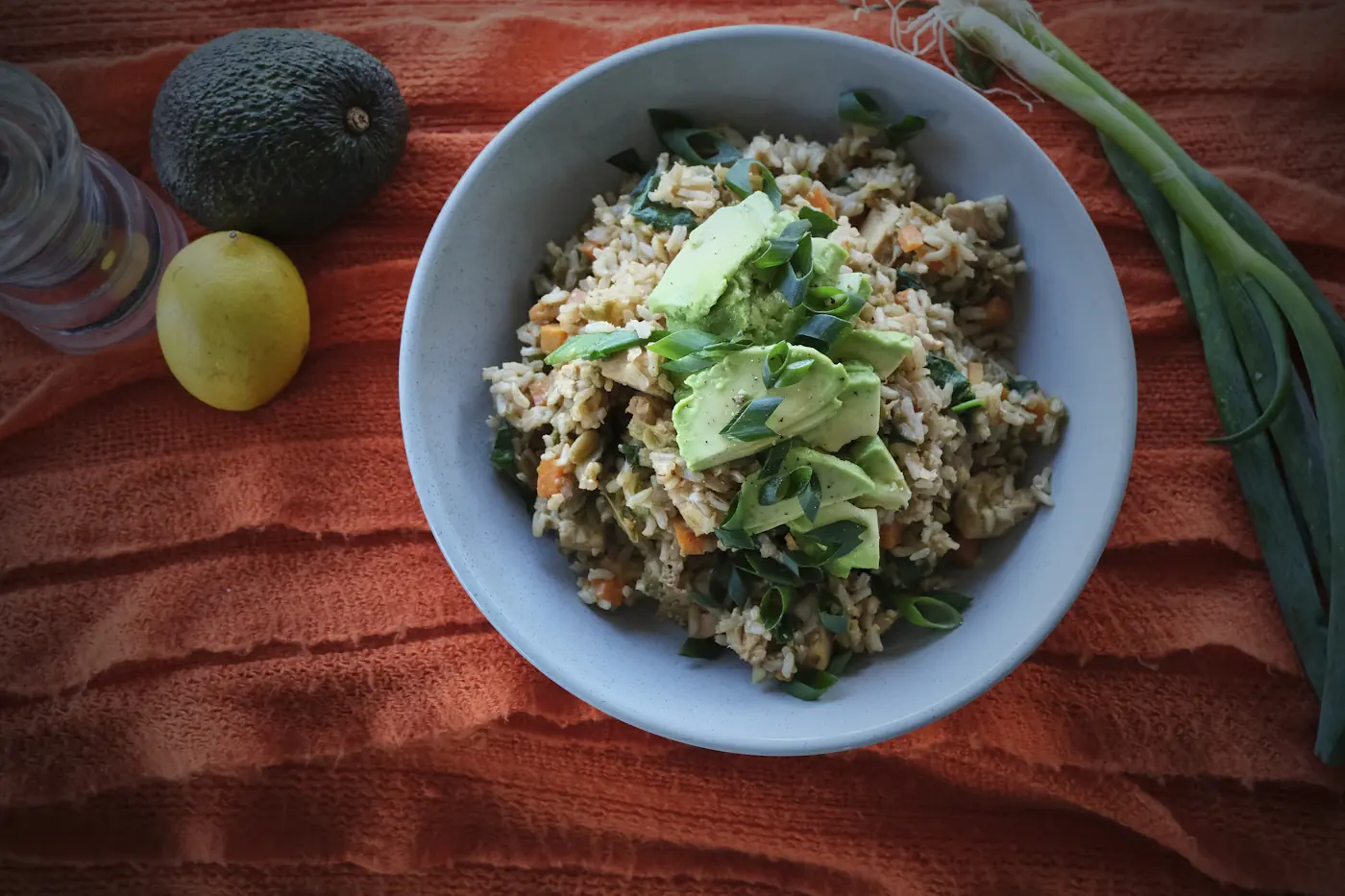
Imagine an evening with canned beans, carrots, spinach, rice, an unopened can of unsweetened coconut milk, and two limes. The cook wants a substantial bowl without another grocery trip. After checking the ingredients and choosing familiar cooking methods, they decide on a thick bean-and-vegetable preparation served over plain rice. This gives the sauce somewhere to go without requiring it to become a soup.
The carrots are prepared first because they need more attention than the greens. Beans and coconut milk join the main preparation according to the cook's chosen method, while the rice cooks separately following its package directions. The spinach enters at the stage appropriate to that method. Lime is used modestly at the end, with wedges left for individual bowls. The purpose of this sequence is organization, not a universal cooking instruction.
At the table, one person wants more sauce and another prefers more rice. Serving the components separately accommodates both without changing the shared dinner. The cook keeps an additional garnish optional because the meal already has enough flavor. What makes this example useful is not the exact ingredient combination; it is the decision to give each ingredient a role and avoid expanding the task.
Adjust to a different pantry without pretending everything is equivalent
A substitution should preserve a function, not merely replace one noun with another. If you swap a firm vegetable for a delicate one, the preparation order may need to change. If you replace beans with an ingredient that requires a different safe cooking process, use a reliable method for that ingredient. Similar placement on a shopping list does not mean identical behavior in a pan.
Ask what the missing ingredient contributed. Was it bulk, sweetness, aroma, crunch, or a familiar flavor? Then consider whether the meal truly needs that contribution. You may be able to omit a garnish completely. A missing main component is different: the meal may need a new structure rather than a cosmetic substitution. Recognizing that difference keeps improvisation grounded.
Sometimes the best adaptation is to stop calling the result the same dish. If the pantry offers a different set of ingredients, let dinner become a new combination. This removes the pressure to imitate an unavailable ideal and encourages honest descriptions. “Vegetables with a coconut-lime sauce” can be more useful than attaching the name of a traditional preparation whose defining elements are absent.
Manage timing with one visible checkpoint
Choose the moment when all components need to be ready, then work backward from the slowest one. A plain staple may determine the schedule even if the sauce feels like the main event. Read the relevant package or recipe instructions before beginning. This small pause prevents the familiar situation in which a finished sauce waits while an overlooked accompaniment still needs substantial cooking.
Keep a clear space for tasting and assembling. A crowded counter makes it harder to notice a missing utensil or a bowl that is too small. Set out the serving pieces early, then remove ingredients once their role is finished. The goal is not a spotless kitchen throughout cooking; it is a kitchen in which the next necessary action remains obvious.
If one component finishes first, handle it according to appropriate holding guidance rather than leaving it indefinitely while you improvise. For an everyday dinner, it is often better to simplify the remaining component than to pursue a perfect garnish. A coherent meal served at a sensible time is more valuable than a minor flourish that disrupts everything else.
Taste for a direction, not an abstract perfection
Before adjusting the pot, describe what seems wrong in ordinary words. Too heavy, too sharp, too bland, and too watery are different problems. Randomly adding more seasoning can make them harder to distinguish. Taste a small portion with the accompaniment you intend to serve; a sauce alone may seem stronger than it does over plain rice or another staple.
Make one small adjustment at a time and taste again. Keep notes only if you expect to repeat the combination. A few words such as “less sauce next time” or “carrots need a head start” are enough. You do not need a laboratory record to learn from dinner. The value comes from connecting an observation to a specific future change.
Accept that individual bowls may differ. A shared meal can have a stable center while allowing a little variation at the table. Optional lime, a plain side, or a separately served garnish provides choice without turning dinner into a collection of unrelated orders. This is especially helpful when appetites and flavor preferences differ within one household.
Before clearing the table, notice whether the bowl satisfied the appetite you started with. A dish can taste balanced yet need a more substantial accompaniment, or feel generous while using more sauce than you enjoyed. That distinction helps you adjust the meal's structure instead of assuming the next version needs stronger seasoning.
Give leftovers an actual destination
Before putting food away, decide how it is likely to be eaten. Separate storage may preserve the distinction between a sauce and its base, while a combined portion may be convenient for a particular lunch. Use suitable containers, store promptly, and follow current food-safety guidance. Do not leave the decision until a full pot has been forgotten on the counter.
Label leftovers with enough information to recognize them later. A brief name and date are more useful than a hopeful memory. If the next day is already full of meals away from home, do not assume the food will somehow fit. Consider a storage option appropriate to the dish, or prepare a smaller amount the next time you use this framework.
The larger lesson is that pantry cooking works best when it begins and ends with attention to what is actually in the kitchen. Coconut and lime provide a recognizable flavor direction, but the durable skill is deciding what each ingredient is doing. That skill can make an ordinary dinner feel considered without requiring a new shopping list every evening.
For safe handling and storage, refer to USDA food-safety resources and the instructions on the products you use.